

The good news is that there's no bad time to visit the Virgin Islands. Temperatures stay warm all year, the water is always inviting, and the sun shines far more often than not. But the best time for your trip depends on what matters most to you: perfect weather, lower prices, fewer crowds, calm seas for boat days, or a front-row seat to Carnival. All while you stay at The Berg villa on St. Thomas.
This guide breaks down the Virgin Islands year month by month, covering weather, crowds, prices, hurricane season, and the festivals and events worth planning around across the U.S. and British Virgin Islands.
Quick Answer: The best time to visit the Virgin Islands is from mid-December to mid-April, when the weather is driest and sunniest, though it's also the busiest and most expensive season. For a mix of great weather, fewer crowds, and lower rates, visit from late April through June. Hurricane season runs from June 1 to November 30, with the highest risk from August through October.
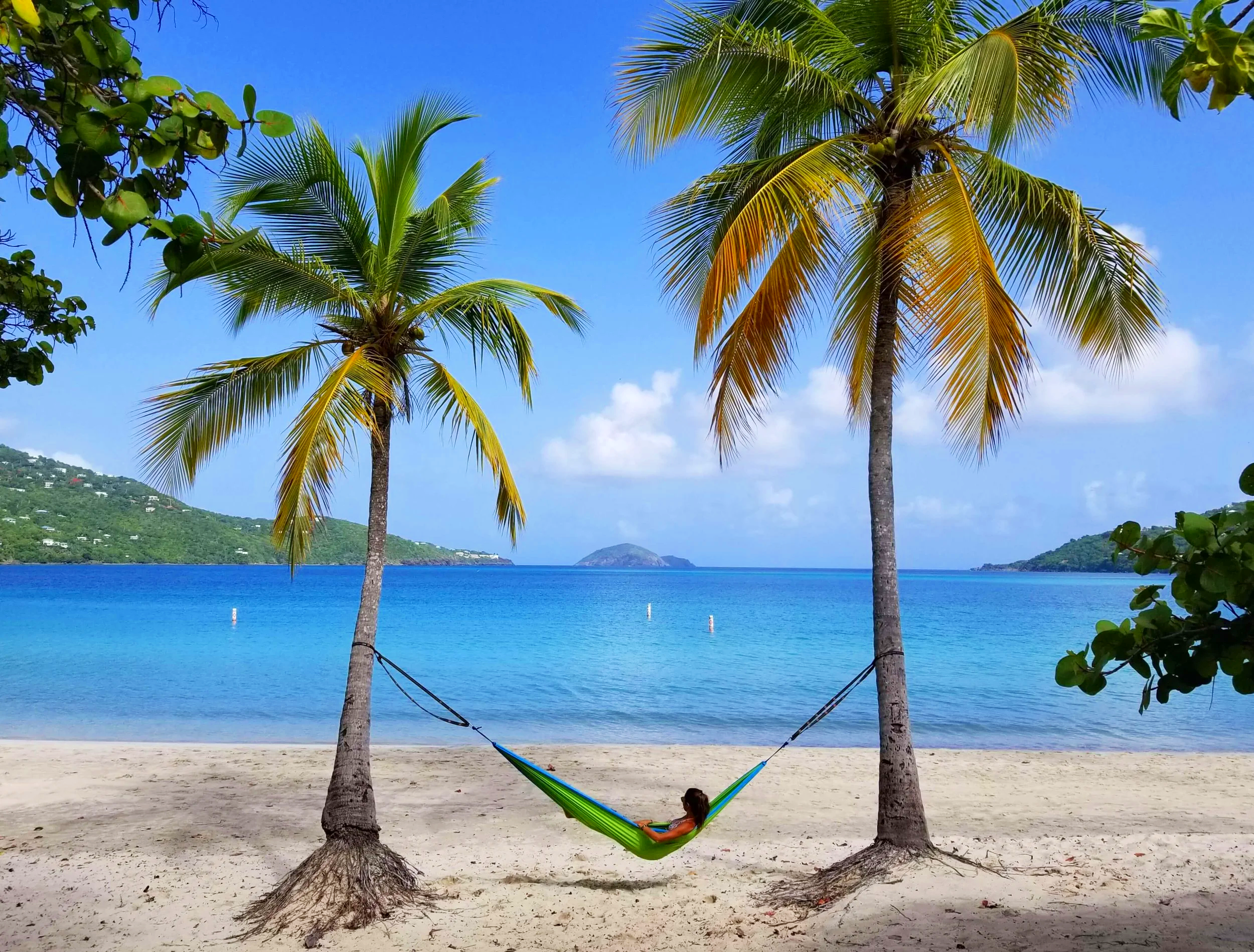
Magens Bay, St. Thomas, USVI
The Seasons Explained
High Season: Mid-December to Mid-April
This is the Virgin Islands' most popular time to visit, and for good reason. Days are sunny and dry, humidity is lower, and the trade winds keep things comfortable. It's also when cruise ship traffic, flights, and prices peak.
Pros: The best weather of the year, perfect sailing conditions, and a lively atmosphere
Cons: The highest prices, the biggest crowds, and the need to book well in advance
Good to know: Winter can bring occasional northern swells, which can make some north-facing beaches choppy and sometimes close sea access to places like The Baths. Strong "Christmas winds" in December and January can also make boat crossings bumpier.
Shoulder Season: Late April to June
Many locals and frequent visitors consider this the sweet spot. The weather is still beautiful, the crowds thin out after Easter, and prices drop. The sea is often calm, making it a great time for snorkeling and boat days.
Pros: Great weather, lower rates, fewer crowds, and calm seas
Cons: Slightly warmer and more humid, and some years bring seaweed (sargassum) to certain beaches
Summer: July and August
Summer is hot, sunny, and generally calm, with warm water and brief afternoon showers. It's a popular time for families, and the islands have a relaxed, local feel.
Pros: Warm water, calm seas, family-friendly timing, and festivals
Cons: Hotter temperatures, and it's the start of the more active part of hurricane season
Low Season: September to November
This is the quietest and most affordable time to visit. September and October are the peak of hurricane season and the wettest months, and some restaurants, bars, and businesses close for a few weeks. By mid-to-late November, the islands start gearing up for the busy season again.
Pros: The lowest prices and the fewest crowds
Cons: The highest hurricane risk, more rain, and some closures
Hurricane Season in the Virgin Islands
Hurricane season in the Caribbean runs from June 1 to November 30, with the highest risk from August through October, especially September.
Most days during hurricane season are sunny and beautiful, and many trips happen without any issues. But if you're traveling during these months:
Buy travel insurance that covers weather-related cancellations.
Book flexible reservations when possible.
Watch the forecast in the weeks before your trip.
Have a backup plan for boat days, since tropical weather can affect ferries and charters.
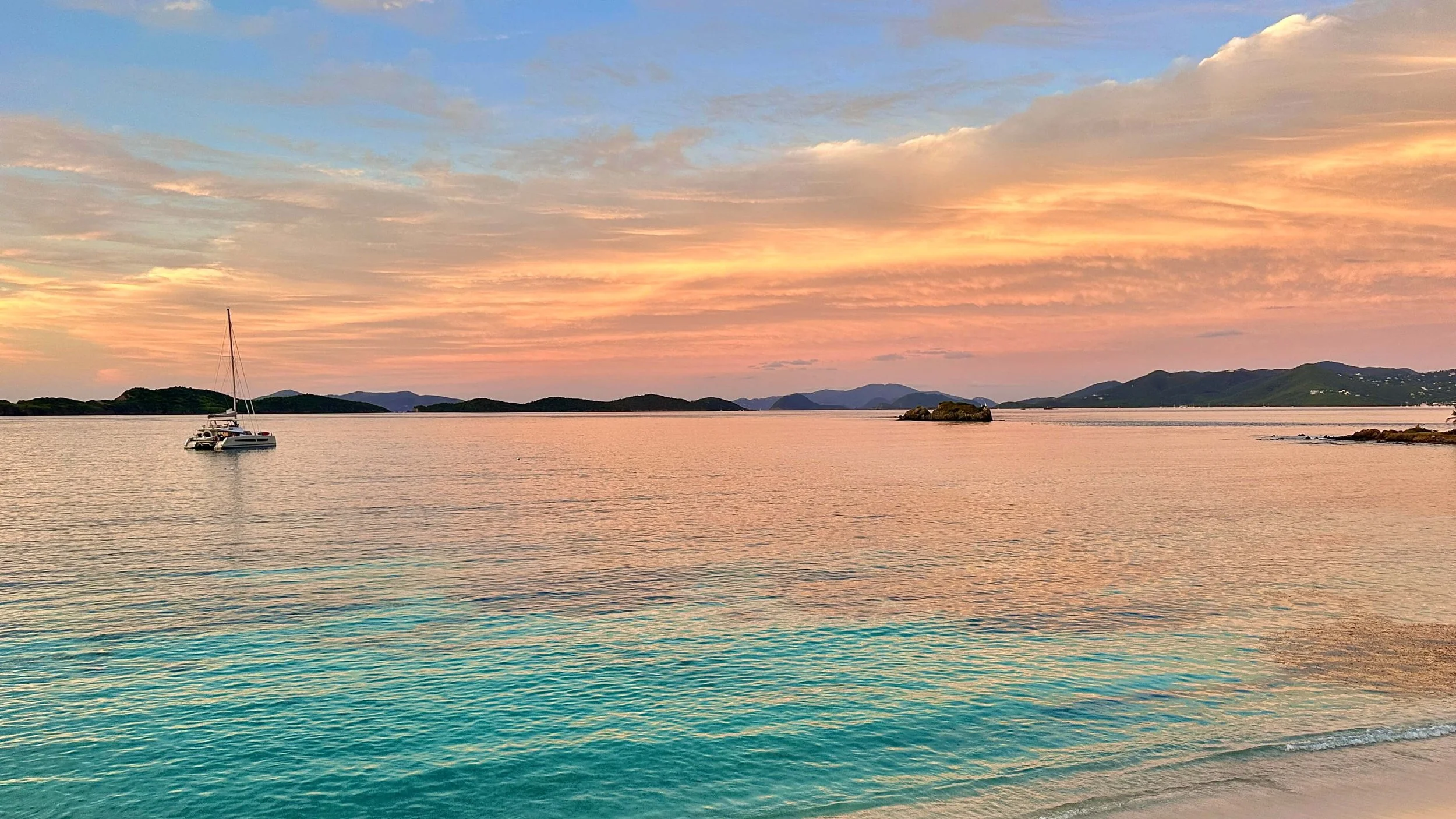
Sunset from St. Thomas looking towards St. John and the BVI
Month-by-Month Guide to the Virgin Islands
January
Weather: Sunny, dry, and breezy, with comfortable temperatures.
Crowds and prices: High season. Book early.
Events: Three Kings Day (January 6) is a holiday in the USVI. On St. Croix, the Crucian Christmas Festival wraps up in early January. On St. Thomas, the Bordeaux Farmers' Market hosts its annual Agriculture and Culture Vegan Food Fair around Martin Luther King Jr. weekend.
Bonus: Humpback whales migrate through Virgin Islands waters from about January through April.
February
Weather: One of the driest, sunniest months of the year.
Crowds and prices: Peak season, especially around Presidents' Day.
Good for: Beach days, sailing, and whale watching.
March
Weather: Warm, sunny, and dry.
Crowds and prices: High season, busy with spring breakers.
Events: Sailing regattas bring racing boats to St. Thomas and the BVI in the spring. March 31 is Transfer Day in the USVI, marking the 1917 transfer from Denmark to the United States.
April
Weather: Beautiful, with warm temperatures and mostly dry days.
Crowds and prices: Busy through Easter, then prices begin to drop.
Events: Easter is a major celebration throughout the islands, with holidays on Holy Thursday, Good Friday, and Easter Monday in the USVI. The BVI Spring Regatta and Sailing Festival typically takes place in late March or early April. St. Thomas Carnival usually kicks off in late April.
May
Weather: Warm and mostly dry, with calm seas.
Crowds and prices: Shoulder season, with lower rates and fewer crowds.
Events: St. Thomas Carnival usually culminates in late April or early May with J'ouvert, the Children's Parade, and the Adults' Parade.
Good for: Snorkeling, boat days, and great value.
June
Weather: Warm, with occasional brief showers. Hurricane season officially begins June 1, but the early season is typically quiet.
Crowds and prices: Moderate, with good deals.
Events: The St. John Festival builds throughout June with cultural events leading up to its July finale.
July
Weather: Hot and sunny, with warm water and calm seas.
Crowds and prices: Moderate, popular with families.
Events: July 3 is Emancipation Day in the USVI, marking the end of slavery in the Danish West Indies in 1848. The St. John Festival culminates around the Fourth of July with parades, a food fair, and fireworks over Cruz Bay. In late July and early August, the BVI celebrates its Emancipation Festival on Tortola.
August
Weather: Hot and humid, with more frequent showers. Hurricane activity begins to increase.
Crowds and prices: Lower crowds and prices.
Events: The BVI Emancipation Festival continues in early August.
Tip: Consider travel insurance.
September
Weather: The peak of hurricane season and one of the wettest months.
Crowds and prices: The quietest and least expensive month of the year.
Good to know: Some restaurants, bars, and tour operators close for a few weeks, and some ferry routes run on a reduced schedule.
October
Weather: Still in the peak of hurricane season, with frequent showers.
Crowds and prices: Very quiet, with low prices.
Good to know: Businesses gradually reopen through the month.
November
Weather: Rain begins to taper off late in the month.
Crowds and prices: Prices start rising toward the end of the month as high season approaches.
Events: November 1 is Liberty Day in the USVI. In late November, Anegada hosts its Lobster Festival, celebrating the island's famous spiny lobster.
December
Weather: Sunny and breezy, with the start of the dry season.
Crowds and prices: Quiet in early December, then very busy and expensive from mid-December through the holidays.
Events: The holiday season is festive across the islands, with Christmas on December 25 and the Second Day of Christmas on December 26 in the USVI. St. Croix's Crucian Christmas Festival begins in December. On December 31, Foxy's Old Year's Night party on Jost Van Dyke is one of the most famous New Year's Eve celebrations in the Caribbean.
More Tips for Planning Your Trip
Book early for high season. Places to stay, flights, rental cars, and charters book up months in advance from December through April, especially around the holidays and Carnival.
Check the cruise schedule. Popular beaches and attractions are busiest on days when several cruise ships are in port, especially in high season.
Watch for seasonal closures. In September and October, some businesses close for a few weeks. Check ahead before planning around a specific restaurant or tour.
Plan boat days early in your trip. Weather can affect ferries and charters year-round. Scheduling them early gives you time to reschedule.
Pack for the sun. No matter the season, bring reef-safe sunscreen, a hat, sunglasses, and light, breathable clothing.
Frequently Asked Questions About the Best Time to Visit the Virgin Islands
What is the best month to visit the Virgin Islands?
For the best weather, visit from mid-December to mid-April. For great weather with fewer crowds and lower prices, May is often considered one of the best months to visit.
When is hurricane season in the Virgin Islands?
Hurricane season runs from June 1 to November 30, with the highest risk from August through October, especially September.
What is the cheapest time to visit the Virgin Islands?
September through early November is usually the cheapest time to visit the Virgin Islands, since it's the peak of hurricane season and the quietest time of year.
What is the weather like in the Virgin Islands?
The Virgin Islands are warm year-round, with typical air temperatures from the high 70s to high 80s °F and water temperatures around 79 to 84 °F. Winter is the driest season, and fall is the wettest.
When is St. Thomas Carnival?
St. Thomas Carnival usually takes place in late April and early May, with events building in the weeks before.
What is the best time for sailing in the Virgin Islands?
December through April offers the most reliable trade winds and dry weather for sailing. May through July often brings calmer seas, which are great for snorkeling and relaxed boat days.
Is it a good idea to visit the Virgin Islands during hurricane season?
Many trips during hurricane season go smoothly, and prices are lower. If you visit from August through October, buy travel insurance, book flexible reservations, and watch the forecast before your trip.
Plan Your Perfect Virgin Islands Getaway
Whatever time of year you visit, the Virgin Islands are waiting. Book direct here on St. Thomas and get our hosts' insider tips on the best times for beaches, boat days, festivals, and great value.