Charlotte Amalie is one of the most historic towns in the Caribbean. Behind the waterfront jewelry stores and cruise ship crowds, you'll find brick step-streets built by the Danes in the 1700s, a red fort that has stood since the 1600s, a synagogue with a sand floor, hidden courtyards, and colorful colonial buildings with names like Dronningens Gade and Kongens Gade.
The capital of the U.S. Virgin Islands was a busy Danish trading port for more than two centuries before the United States purchased the islands in 1917, and much of that history is still standing. Most of it is within a short walk, making downtown perfect for a self-guided morning tour.
This guide covers the best things to do in Charlotte Amalie, a walking route that links the top sights, and tips for shopping, eating, and beating the heat.
Quick Answer: The top things to do in Charlotte Amalie are touring Fort Christian, the oldest standing structure in the U.S. Virgin Islands; climbing the 99 Steps to Blackbeard's Castle; visiting the St. Thomas Synagogue and its famous sand floor; relaxing in Emancipation Garden; and exploring the shops and historic alleys of Main Street.
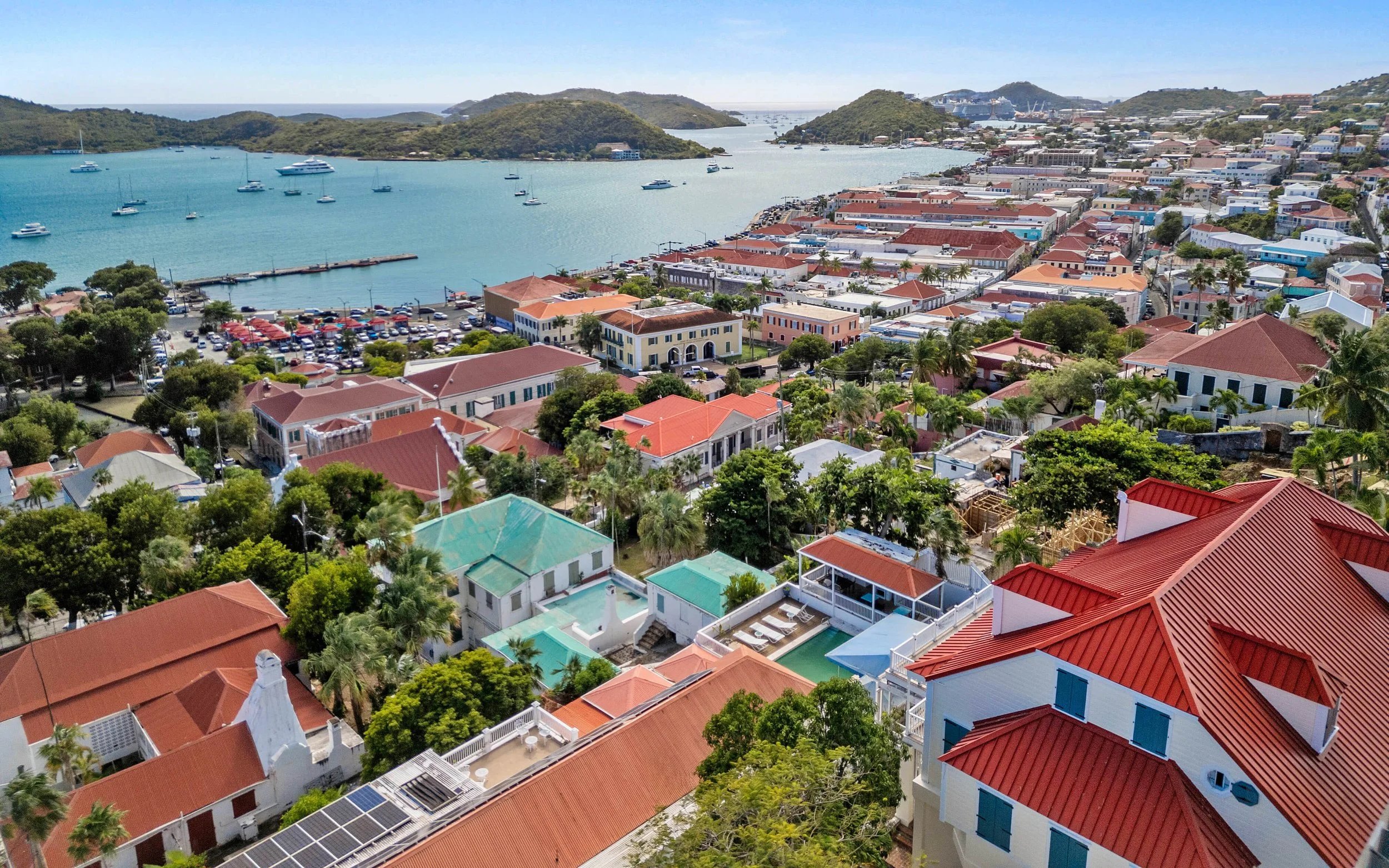
Charlotte Amalie, St. Thomas
Top Things to Do in Charlotte Amalie
1. Fort Christian
Fort Christian is the unmistakable red building on the waterfront and the oldest standing structure in the U.S. Virgin Islands. The Danes built it between 1672 and 1680 and named it after King Christian V of Denmark. Over the centuries, it served as the island's defensive fort, the governor's residence, a church, a courthouse, and a jail.
Today, Fort Christian is a museum that tells the story of the islands from the Indigenous peoples through the Danish colonial era and the 1917 transfer to the United States, including the lives of enslaved Africans and the generations that followed emancipation. On a self-guided tour, you'll see the dungeons, a courtroom, a chapel, and period furnishings, and you can climb to the rooftop for harbor views. Look for the fort's distinctive clock tower above the entrance.
Time needed: About 1 hour
Tip: The museum is generally open on weekdays, but hours can vary, so check before you go. Admission is about $10 per person, and there's a paid parking lot next door. For a spooky twist, evening ghost tours of the fort explore its dungeons and local legends.
2. Emancipation Garden
Right next to Fort Christian, Emancipation Garden is a shady public square that honors one of the most important moments in Virgin Islands history. It commemorates the emancipation of enslaved people in the Danish West Indies in 1848. Today, it's a gathering place for community events and celebrations, and a nice spot to sit in the shade and watch downtown life.
Time needed: 10 to 15 minutes
3. Vendors Plaza
Beside Emancipation Garden, Vendors Plaza is an open-air market with stalls run by local vendors selling T-shirts, jewelry, crafts, and souvenirs. It's also home to the "I love STT" sign, one of the most popular photo spots in town.
Tip: Greet vendors with a friendly "Good morning" or "Good afternoon" before asking about prices. It's an important local courtesy.
4. The Legislature Building and Government House
Across from the fort, the bright green Legislature Building, home of the Virgin Islands Legislature, stands out along the waterfront. The building dates back to the Danish era, when it served as military barracks.
Up the hill on Government Hill, Government House is an elegant white building with a red roof, built in the 1860s. It's still the official office of the Governor of the U.S. Virgin Islands.
Time needed: A few minutes to admire from outside
5. Frederick Evangelical Lutheran Church
Near Government House, Frederick Evangelical Lutheran Church is home to one of the oldest Lutheran congregations in the Western Hemisphere, a reminder of the island's Danish roots. The graceful church building is a quiet, beautiful stop along the walking route.
Tip: It's an active place of worship, so dress modestly and be respectful if you step inside.
6. Hotel 1829
Just up the street, Hotel 1829 was built in 1829 as the private home of a wealthy merchant and became a hotel in 1906. Nearly every detail feels like a step back in time, and the courtyard features a waterfall fountain made from thousands of pieces of amber. The bar's veranda, once part of the old kitchen, has one of the best views in town.
Tip: The bar is usually open in the late afternoon and evening, making it a perfect spot for a sundowner after your walk.
7. The 99 Steps
The 99 Steps are Charlotte Amalie's most famous landmark. The Danes built the island's "step-streets" in the 1700s to make it easier to climb the steep hills above the harbor, often using bricks that arrived as ballast in ships from Europe. Despite the name, there are actually 103 steps, though locals will happily debate that with you.
The climb is steep, but the views of town and the harbor from the top are worth it.
Where: Starts just past Hotel 1829 on Government Hill
Tip: Climb in the morning before the heat of the day, and take your time.
8. Blackbeard's Castle and Skytsborg Tower
At the top of the 99 Steps, Blackbeard's Castle is a historic park built around Skytsborg Tower, a Danish lookout tower built in 1679. While the legend connects it to the famous pirate Blackbeard, it was actually a defensive watchtower. Climb the tower for panoramic views over the harbor.
The park also includes gardens, pools where you can cool off, a collection of pirate statues, and historic homes like Villa Notman and Haagensen House, filled with antique mahogany furniture. There's also a rum tasting room.
Time needed: 1 to 2 hours
Tip: Admission is by day pass, and some tours drop visitors at the top so you can walk down the 99 Steps into town instead of up. For more great lookouts, see our Best Views in St. Thomas guide.
9. St. Thomas Synagogue
The St. Thomas Synagogue is one of the most unique places to visit on the island. Sephardic Jewish families founded the congregation in 1796, and the current building was completed in 1833. It's the second-oldest synagogue in the Western Hemisphere and the oldest in continuous use under the American flag.
Its most famous feature is the sand floor. According to tradition, it recalls the days when Jews in Spain and Portugal worshipped in secret during the Inquisition and used sand to muffle their footsteps. The building itself is made of local stone, ballast brick from Denmark, and mortar mixed with molasses and sand. Next door, the Weibel Museum explores 300 years of Jewish history in the Virgin Islands.
Tip: The synagogue is generally open to visitors on weekday mornings and afternoons. Dress modestly, and expect a short but steep walk uphill to reach it.
10. Main Street and the Historic Alleys
Main Street, officially called Dronningens Gade, is the heart of Charlotte Amalie's famous duty-free shopping district. Between Main Street and the waterfront, a maze of narrow alleys and passages, like Palm Passage and Royal Dane Mall, is lined with old stone warehouses that once stored goods for Danish traders. Today, they're filled with jewelry shops, boutiques, galleries, and cafés.
Main Street also has an artistic claim to fame. The Impressionist painter Camille Pissarro was born in Charlotte Amalie in 1830 and grew up on Main Street before moving to France.
Tip: U.S. citizens can bring back more duty-free goods from the U.S. Virgin Islands than from most other Caribbean destinations. Ask shops about your allowance.
11. Market Square
At the western end of Main Street, Market Square has been the island's marketplace for generations. Local vendors sell fresh fruit, vegetables, and homemade treats under a large cast-iron roof built in the early 1900s. Saturday mornings are the busiest and liveliest. For more local flavors, see our Local Food in St. Thomas guide.
12. The Waterfront
Charlotte Amalie's waterfront promenade runs along the harbor, with views of sailboats, seaplanes, and cruise ships. It's a pleasant place for a stroll, especially in the early morning or late afternoon. Along the way, you'll find The Pelican Shop, a waterfront cigar and hookah lounge in the A.H. Riise Mall, and Rum Island Pub near Drake's Passage for a rum punch with a view. See our St. Thomas Nightlife Guide for more.
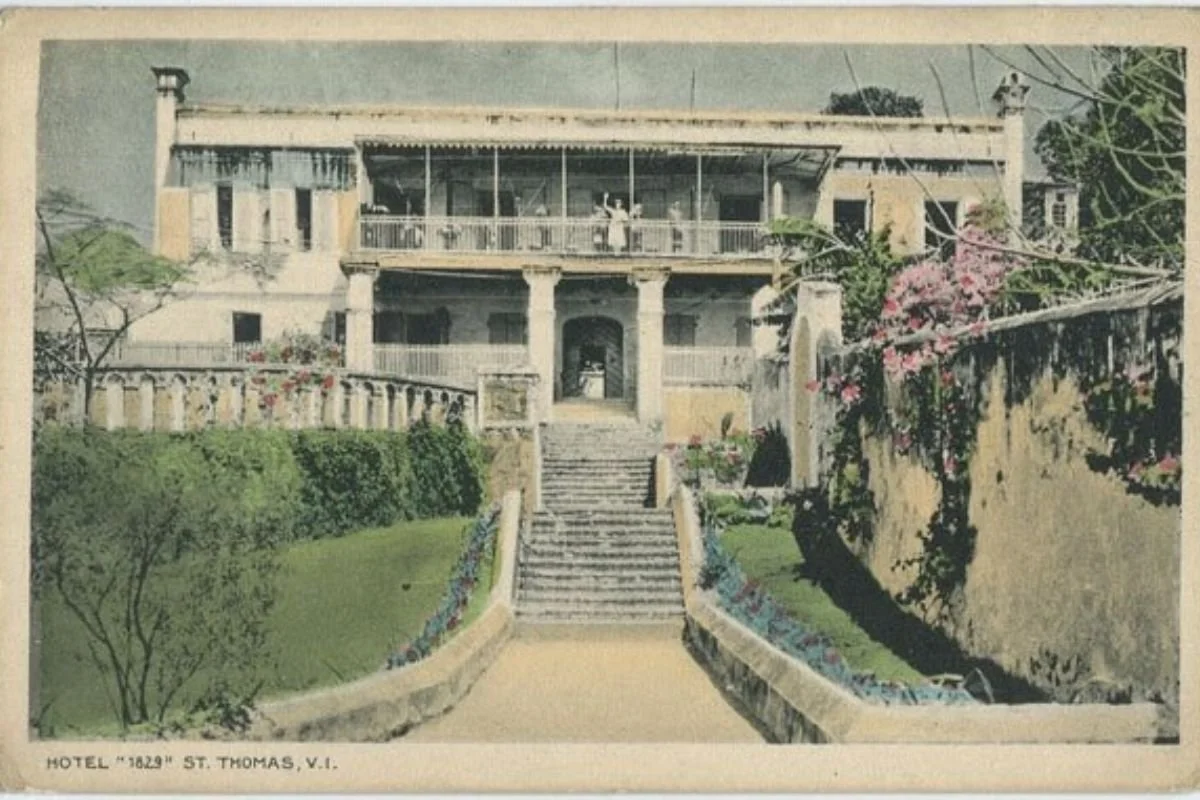
Hotel 1829, St. Thomas
Self-Guided Charlotte Amalie Walking Tour
This easy route links the top sights in about 2 to 3 hours, depending on how long you stop. Most of it is flat, except for the climb up Government Hill and the 99 Steps.
Start at Fort Christian on the waterfront. Tour the museum if it's open.
Walk to Emancipation Garden and Vendors Plaza next door. Snap a photo at the "I love STT" sign.
Head up Government Hill past the Legislature Building to Frederick Lutheran Church and Government House.
Continue to Hotel 1829 and admire the historic building.
Climb the 99 Steps to the top.
Explore Blackbeard's Castle and climb Skytsborg Tower for harbor views.
Walk over to the St. Thomas Synagogue to see the sand floor and the Weibel Museum.
Wander down to Main Street and explore the shops and alleys.
Finish at Market Square, then head back along the waterfront for lunch.
Where to Eat in Charlotte Amalie
Gladys' Café: A downtown institution for local dishes like kallaloo, stewed oxtail, and conch chowder, plus famous homemade hot sauces. Open for breakfast and lunch.
The Tuck Shop Downtown: Authentic local cooking in a 300-year-old building on Back Street, including fried ole wife and stewed oxtail.
Petite Pump Room: Family-owned for more than 50 years, serving West Indian breakfast and lunch with harbor views.
Sugarcane Grille: Caribbean dishes on a hillside overlooking the harbor at the Bunker Hill Hotel.
For more, see our Best Restaurants in St. Thomas and Local Food in St. Thomas guides.
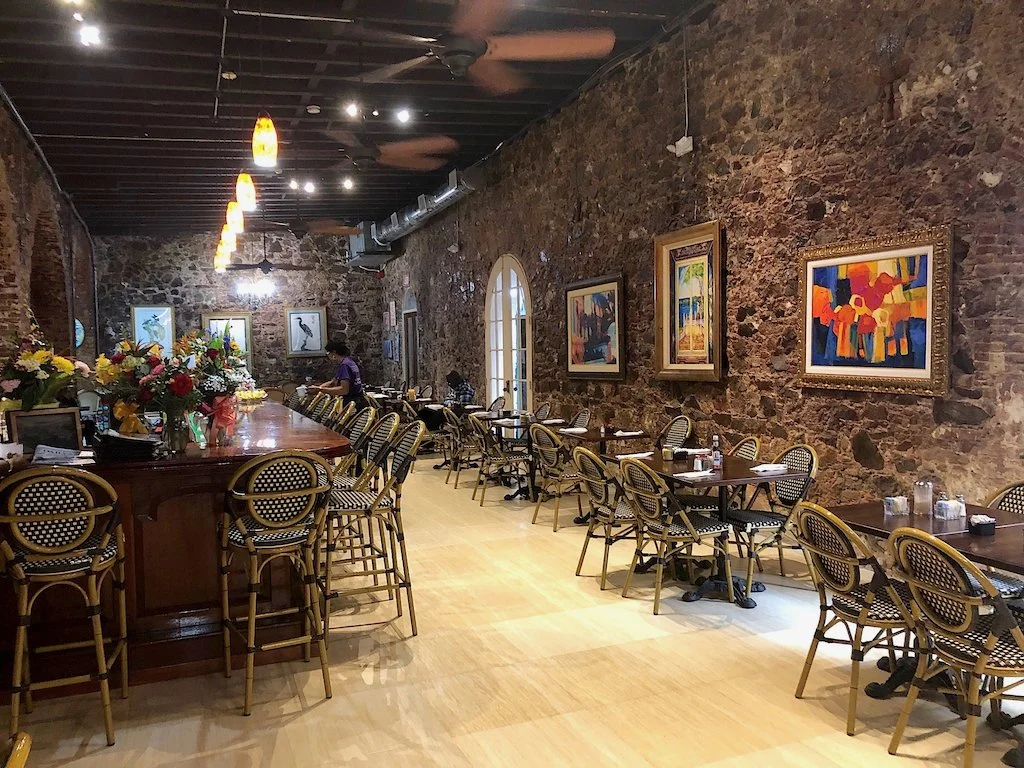
Glady’s Cafe, St. Thomas
Beyond Downtown
Frenchtown: Just west of downtown, this historic fishing village settled by families from St. Barts is known for its restaurants and nightlife.
Hassel Island: A short kayak paddle from Frenchtown takes you to this part of the Virgin Islands National Park, with hiking trails, colonial forts, and ruins. See our Hidden Gems in St. Thomas guide.
Paradise Point: A short drive east in Havensight, the Skyride carries you 700 feet above the harbor for panoramic views.
Tips for Visiting Charlotte Amalie
Go early. Mornings are cooler, and you'll beat the cruise ship crowds that fill downtown by late morning.
Check the cruise schedule. Downtown is busiest when several ships are in port. Some shops also open longer hours on cruise ship days.
Plan around Sundays. Many shops, museums, and restaurants are closed or have limited hours on Sundays.
Stay cool. Wear comfortable shoes, a hat, and sunscreen, and carry water. There's little shade on some streets, and the hills are steep.
Park once. Parking is available in paid lots near Fort Christian and along the waterfront. Park, then explore on foot.
Cover up. Swimsuits and bare chests aren't appropriate in town. Wear a shirt or cover-up, and dress modestly when visiting churches and the synagogue. Learn more in our St. Thomas Etiquette guide.
Say good morning. Always greet shopkeepers and vendors before asking a question. It makes a big difference.
Stay aware. Downtown is busy and friendly by day. Keep an eye on your belongings, and stick to well-traveled streets after dark.
Frequently Asked Questions About Charlotte Amalie
What is Charlotte Amalie known for?
Charlotte Amalie, the capital of the U.S. Virgin Islands, is known for its Danish colonial history, duty-free shopping, and landmarks like Fort Christian, the 99 Steps, Blackbeard's Castle, and the St. Thomas Synagogue.
Can you walk around Charlotte Amalie?
Yes. Most of Charlotte Amalie's top sights are within walking distance of each other. A self-guided walking tour of the main landmarks takes about 2 to 3 hours. Expect some steep hills and stairs.
How many steps are in the 99 Steps?
Despite the name, the 99 Steps in Charlotte Amalie actually have 103 steps. They were built by the Danes in the 1700s and lead up Government Hill toward Blackbeard's Castle.
What is the oldest building in the U.S. Virgin Islands?
Fort Christian in Charlotte Amalie is the oldest standing structure in the U.S. Virgin Islands. The Danes built it between 1672 and 1680.
Why does the St. Thomas Synagogue have a sand floor?
According to tradition, the sand floor recalls the time when Jews in Spain and Portugal worshipped in secret during the Inquisition and used sand to muffle their footsteps. The St. Thomas Synagogue, built in 1833, is the second-oldest synagogue in the Western Hemisphere.
Is Blackbeard's Castle worth visiting?
Yes, especially for history lovers and anyone looking for views. The park includes Skytsborg Tower, built in 1679, historic homes, pirate statues, pools, and panoramic views over Charlotte Amalie Harbor.
Are shops in Charlotte Amalie open on Sunday?
Many shops, museums, and restaurants in Charlotte Amalie are closed or have limited hours on Sundays. Weekdays and Saturdays are the best times to visit.
Explore Historic St. Thomas from Your Home Base
Charlotte Amalie is best explored early, before the crowds and the midday heat. Book Here and get our hosts' tips for parking, shopping, and the best local lunch spots in town.