

Most national parks are known for mountains, canyons, or forests. Virgin Islands National Park is known for turquoise bays, coral reefs, sea turtles, and white-sand beaches, along with tropical forest trails, centuries-old sugar plantation ruins, and ancient rock carvings.
The park covers roughly 60 percent of St. John, which is why the island feels so different from the rest of the Caribbean. There are no high-rises or big resorts along its shores, just protected bays and green hills that look much as they did generations ago.
For visitors staying on St. Thomas, the park is just a 20-minute ferry ride away, with no passport needed and no general entrance fee. This guide covers everything you need to know: fees, the best beaches and snorkeling, hiking trails, historic sites, park rules, and tips for making the most of your visit.
Quick Answer: Virgin Islands National Park covers about 60 percent of St. John and has no general entrance fee. The only beach fee is at Trunk Bay, which charges $5 per person ages 16 and up. Top experiences include snorkeling the underwater trail at Trunk Bay, swimming with sea turtles at Maho Bay, exploring the Annaberg Sugar Plantation ruins, snorkeling Waterlemon Cay, and hiking the Reef Bay Trail to ancient petroglyphs. From St. Thomas, take the 20-minute ferry from Red Hook to Cruz Bay.
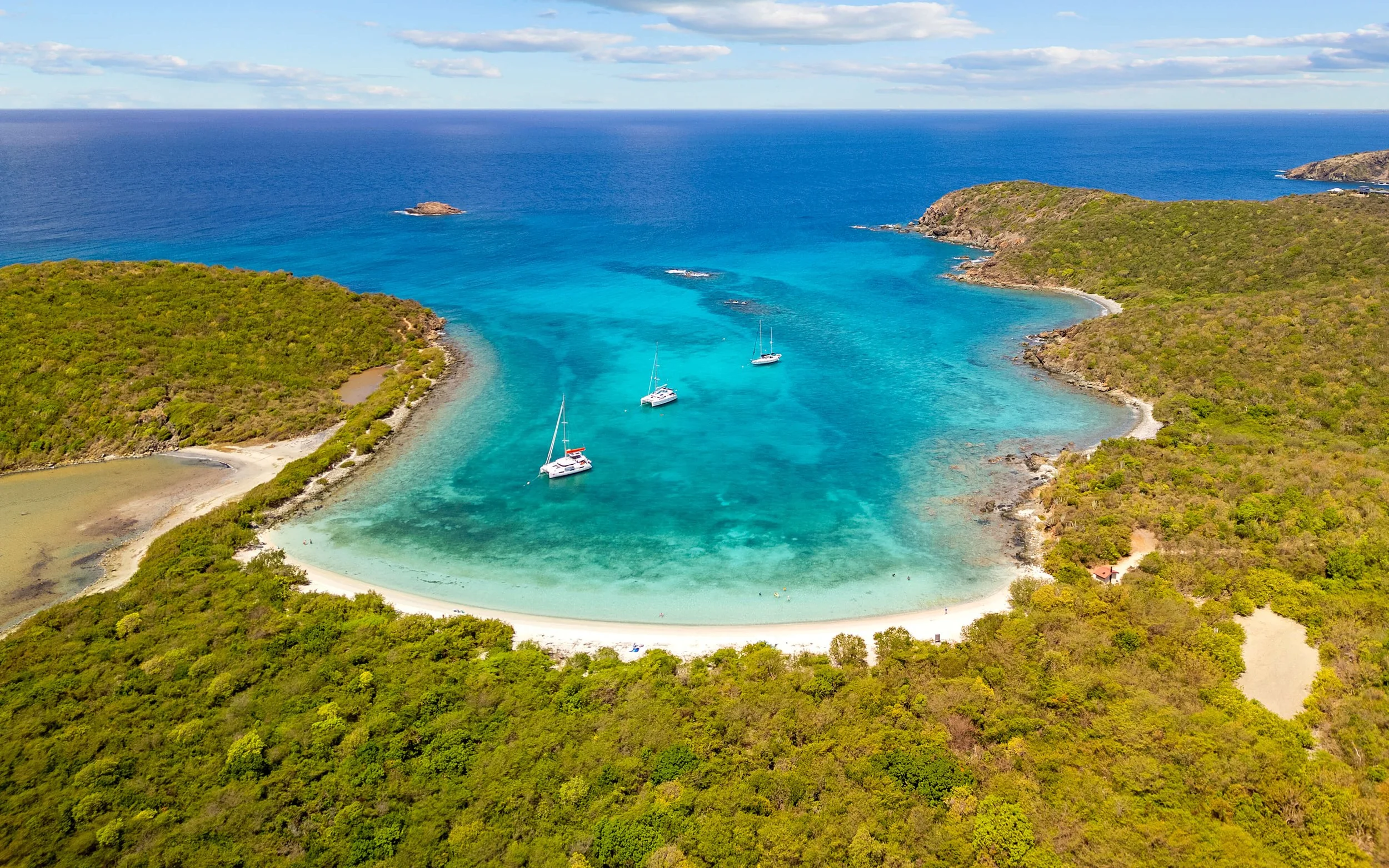
Salt Pond, St. John
A Brief History of the Park
People have lived on St. John for well over a thousand years. Indigenous peoples, including the Taíno, left behind rock carvings, known as petroglyphs, that can still be seen along the Reef Bay Trail today.
In 1718, Denmark began colonizing St. John, and within a few years the island was covered in sugar plantations worked by enslaved Africans. In 1733, enslaved people on St. John launched one of the earliest major slave revolts in the Americas, holding much of the island for months. Slavery in the Danish West Indies finally ended in 1848, and the ruins of more than 100 plantation-era sites remain throughout the park.
In the 1950s, conservationist Laurance Rockefeller purchased large portions of St. John and donated them to the federal government. Virgin Islands National Park was established in 1956. In 2001, the nearby Virgin Islands Coral Reef National Monument was created to protect additional reefs, mangroves, and seagrass beds.
The park doesn't soften this history. Its signage and ruins tell the story of the people who were enslaved here, making a visit to the plantation sites one of the most meaningful experiences on the island.
Park Fees and Passes
Entrance fee: There's no general entrance fee for Virgin Islands National Park. You can drive the roads, hike the trails, visit the ruins, and swim at most beaches for free.
Trunk Bay fee: Trunk Bay charges an amenity fee of $5 per person ages 16 and up from sunrise to sunset. Holders of an Interagency Senior or Access Pass pay half. You can pay at the Trunk Bay fee booth or online through Recreation.gov. The fee helps maintain the beach's lifeguards, restrooms, and facilities.
Mooring fees: Boaters staying overnight on a park mooring ball pay a nightly fee.
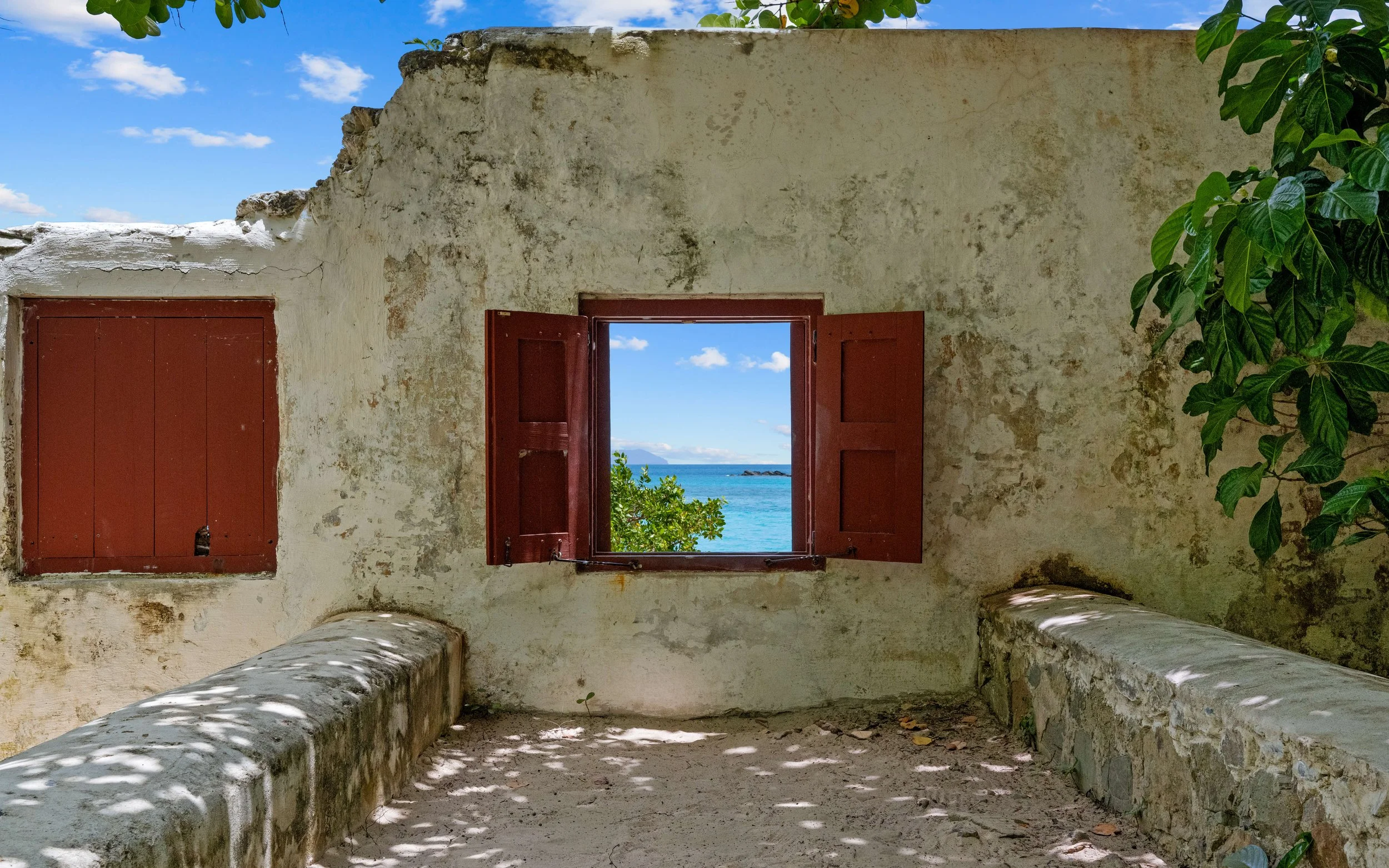
Cinnamon Bay, St. John
Getting to the Park from St. Thomas
Ferry: Take the passenger ferry from Red Hook, St. Thomas, to Cruz Bay, St. John. The ride takes about 20 minutes, and ferries run roughly every hour.
Getting around: Open-air taxis run from Cruz Bay to the popular beaches along North Shore Road, or you can rent a Jeep in Cruz Bay for the most freedom. Car barges from Red Hook are also an option if your rental agreement allows it.
Start at the Visitor Center: The Cruz Bay Visitor Center, near the ferry dock, has maps, exhibits, trail information, and updates on ranger programs and park conditions.
For more on ferries, see our Island Hopping the Virgin Islands guide.
The Best Beaches in the Park
Most of the park's famous beaches line North Shore Road, a winding scenic drive just minutes from Cruz Bay.
Trunk Bay: The park's signature beach, with a 225-yard underwater snorkeling trail marked by signs identifying the coral and marine life. It has lifeguards, restrooms, showers, snorkel rentals, a snack bar, and accessible paths and beach ramps. Facilities are generally open from 8 a.m. to 4 p.m.
Maho Bay: Calm, shallow water where sea turtles and stingrays graze on the seagrass just steps from the road.
Cinnamon Bay: The park's longest beach, with calm water, water sports rentals, and historic ruins nearby.
Hawksnest Bay: A local favorite close to Cruz Bay, with reef at both ends.
Francis Bay: A wide, quiet beach at the end of North Shore Road, next to a salt pond that's great for birdwatching.
Salt Pond Bay: A sheltered, sandy beach on the island's southeast side, with good snorkeling and access to the Ram Head Trail.
For more on St. John's beaches, towns, and restaurants, see our St. John Travel Guide.
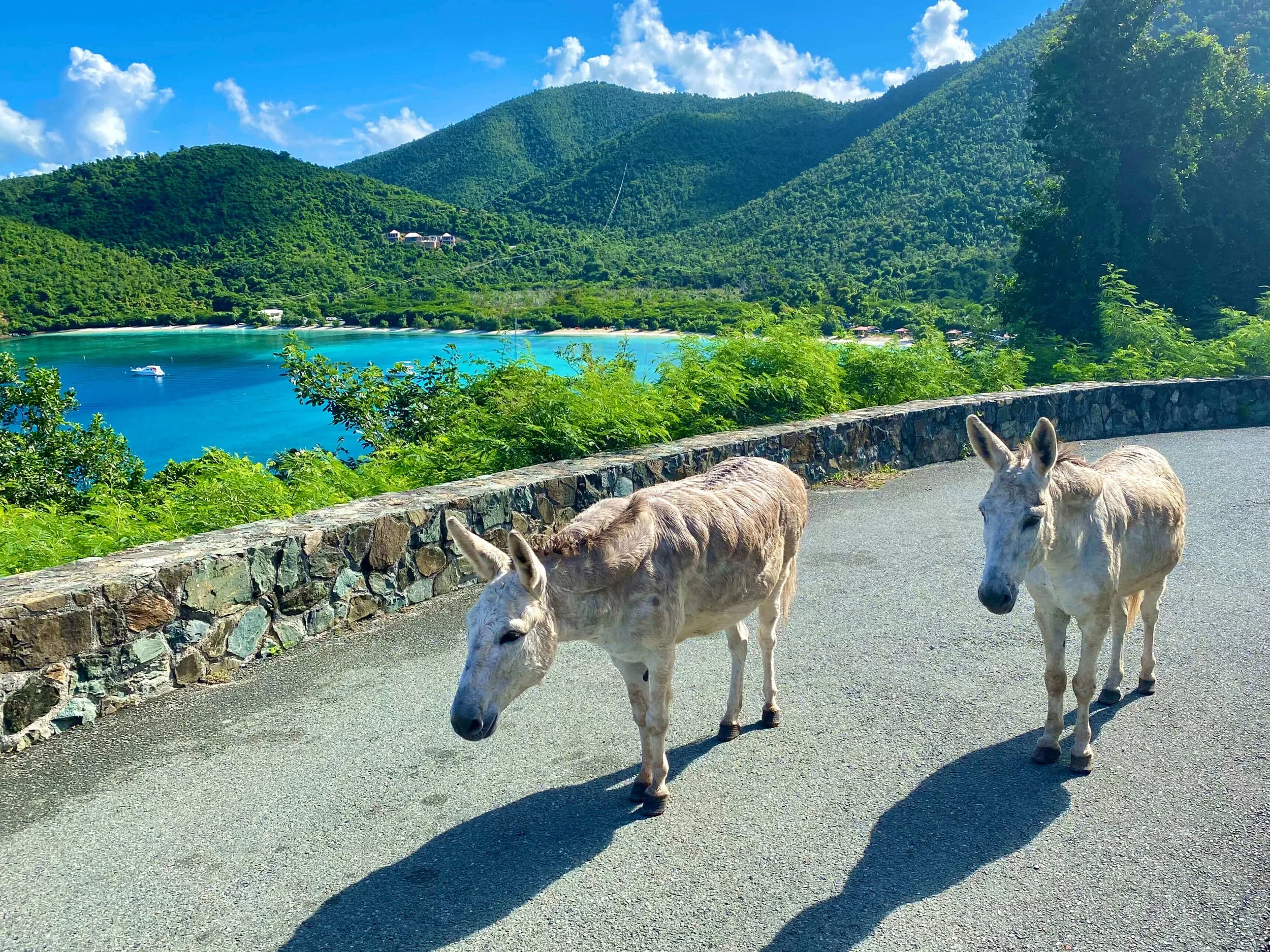
Donkey’s by Maho, St. John
Snorkeling in the Park
The park protects more than 5,000 acres of underwater habitat, including coral reefs, seagrass beds, and mangroves.
Trunk Bay Underwater Trail: Follow the marked trail around a small cay, reading signs about the reef as you go.
Maho Bay: One of the best places in the Virgin Islands to swim with green sea turtles.
Waterlemon Cay: A short swim from the Leinster Bay shoreline to a small island ringed by reef. Look for turtles, rays, and starfish. Currents can be strong, so it's best for confident swimmers.
Hurricane Hole: On the island's east end, part of the Virgin Islands Coral Reef National Monument, where coral grows directly on mangrove roots. It's best reached by boat or kayak tour.
For more spots, see our Best Snorkeling in the Virgin Islands guide.
The Best Hiking Trails
The park has more than 20 trails, ranging from easy strolls to steep, challenging hikes.
Lind Point Trail (Easy)
Starting near the Cruz Bay Visitor Center, this roughly one-mile trail leads to Honeymoon Beach and Salomon Bay, two quiet beaches perfect for a swim. It's the easiest way to reach a park beach on foot from the ferry.
Leinster Bay Trail and Annaberg (Easy)
A flat shoreline trail runs from the Annaberg parking area along Leinster Bay to the Waterlemon Cay snorkel spot. Pair it with a walk through the Annaberg Sugar Plantation ruins.
Cinnamon Bay Loop (Easy)
A short, shaded loop through the forest near Cinnamon Bay, passing the ruins of a sugar factory and a historic cemetery.
Ram Head Trail (Moderate)
Starting at Salt Pond Bay, this rugged trail climbs to Ram Head, the southernmost point of St. John, with sweeping clifftop views of the Caribbean Sea. There's little shade, so go early.
Reef Bay Trail (Challenging)
The Reef Bay Trail is widely considered the park's best hike. It descends a little over two miles from Centerline Road through a succession of forest habitats to the island's south coast. Along the way, a short side trail leads to freshwater pools surrounded by ancient petroglyphs. At the bottom, you'll find the Reef Bay Sugar Factory ruins, among the most complete plantation-era ruins in the park.
The catch is the return trip: you'll either hike back up the steep trail or arrange a boat pickup at the bottom. Check at the Cruz Bay Visitor Center to see whether guided hikes with a boat return are currently available.
Hiking tips:
Start early to avoid the midday heat.
Bring more water than you think you need.
Wear sturdy shoes, bug spray, and sun protection.
Tell someone your plans, since cell service can be spotty.
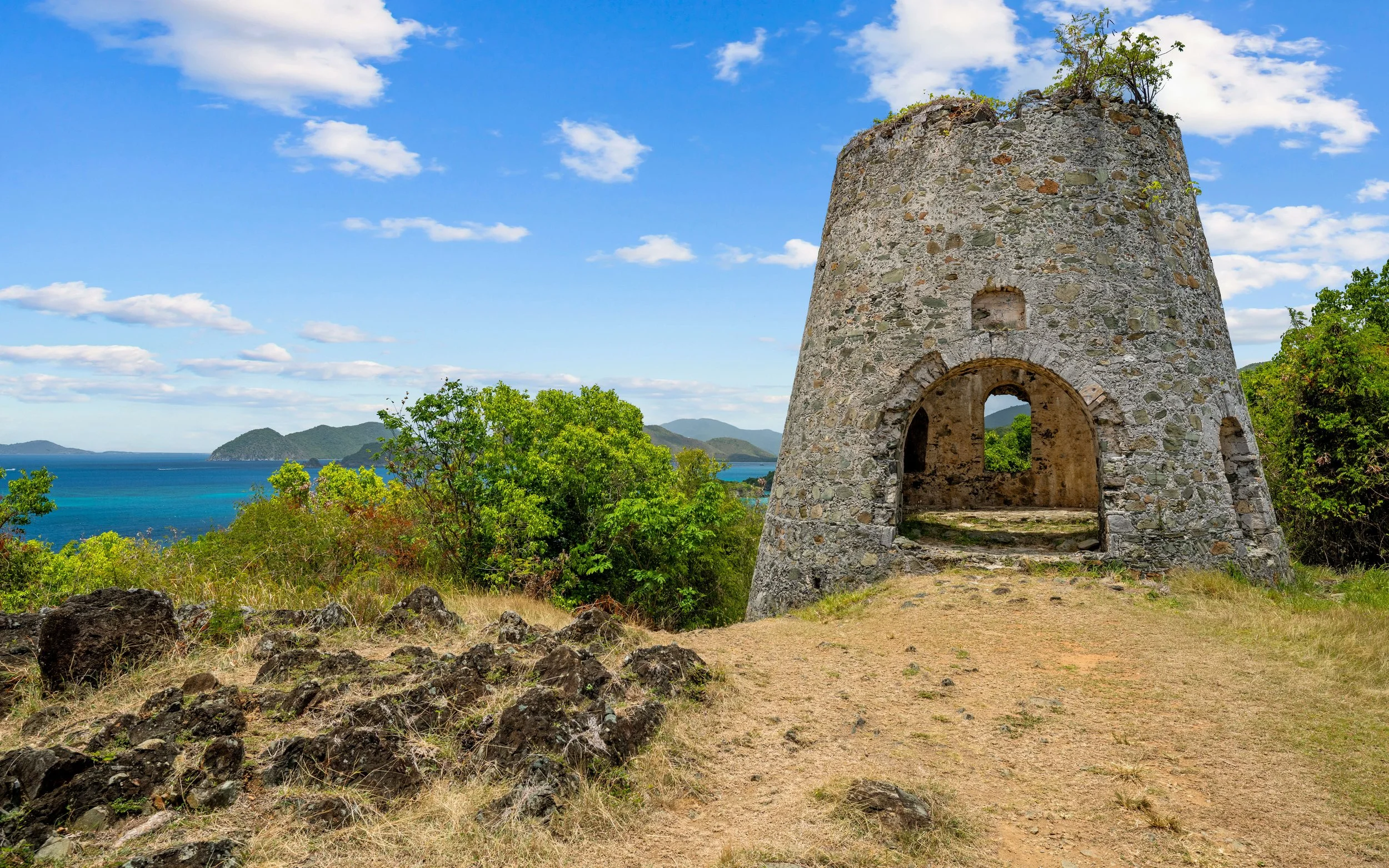
Peace Hill, St. John
Historic Sites in the Park
Annaberg Sugar Plantation: The best-preserved plantation ruins in the park, set on a windswept hillside overlooking Leinster Bay and the British Virgin Islands. A short, self-guided loop leads past the windmill, factory, and remains of the enslaved workers' quarters, with signs that share their history.
Reef Bay Petroglyphs and Sugar Factory: Ancient rock carvings near a freshwater pool and the ruins of a sugar factory along the Reef Bay Trail.
Cinnamon Bay Ruins: Remains of a sugar factory and historic structures along a short, easy trail.
Peace Hill: The ruins of an old windmill on a hilltop above Hawksnest Bay, with panoramic views of the Northside coastline.
What About Caneel Bay?
Caneel Bay, the resort Laurance Rockefeller opened on park land, has been closed since hurricanes Irma and Maria damaged it in 2017. The National Park Service has been working to find a new operator. The beaches around Caneel Bay are still accessible, but there's no hotel or restaurant operating there today.
Park Rules to Know
Take only pictures. Don't remove shells, coral, rocks, plants, or artifacts.
Don't touch coral or stand on reefs, and give sea turtles plenty of space.
Use reef-safe sunscreen. The U.S. Virgin Islands bans sunscreens containing oxybenzone, octinoxate, and octocrylene.
Don't feed wildlife, including the wild donkeys that roam the island.
Drones are prohibited in national parks without a permit.
Stay on marked trails, and don't climb on historic ruins.
Pack out your trash.
Pets aren't allowed on park beaches.
Safety Tips
Lifeguards are only at Trunk Bay. Swim within your abilities everywhere else, and never snorkel alone.
Watch for currents, especially at Waterlemon Cay and exposed points.
Plan ahead. There are no gas stations, grocery stores, or ATMs inside the park, and cell service is patchy. Stock up in Cruz Bay.
Watch for manchineel trees. Their sap and fruit are toxic, so don't touch them or shelter under them in the rain.
Drive carefully. Roads are steep and winding, and you drive on the left.
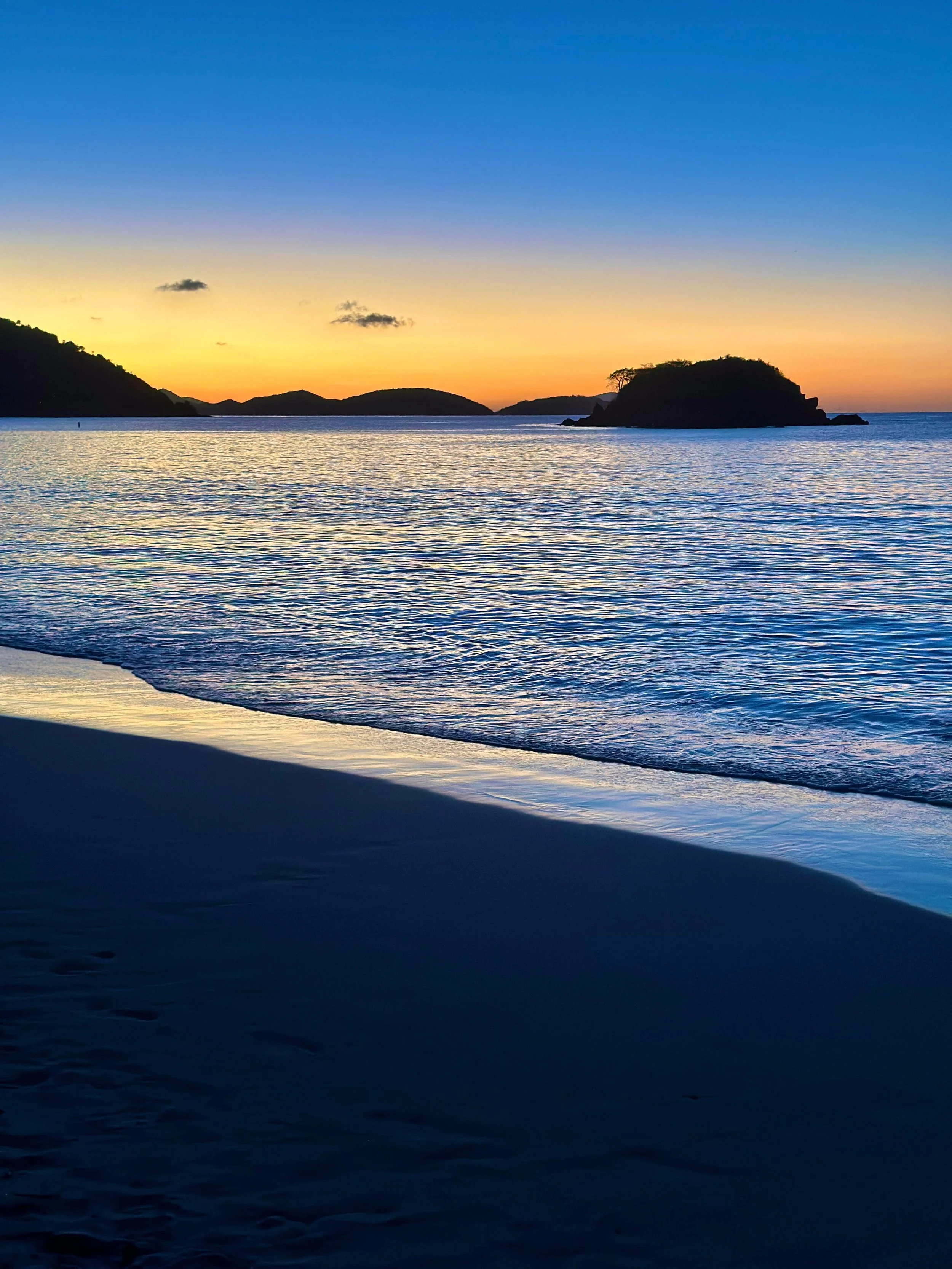
Cinnamon Bay at sunset, St. John
Sample Park Itineraries
One Day in the Park
Take an early ferry from Red Hook to Cruz Bay, and stop at the Visitor Center for a map.
Snorkel the underwater trail at Trunk Bay at opening.
Swim with turtles at Maho Bay.
Explore the Annaberg Sugar Plantation ruins and snorkel Waterlemon Cay.
Head back to Cruz Bay for dinner and the ferry home.
Two Park Days
Day 1: Follow the one-day itinerary above.
Day 2: Hike the Reef Bay Trail in the morning to see the petroglyphs and sugar factory ruins, or drive to the east end for the Ram Head Trail and a snorkel at Salt Pond Bay.
Frequently Asked Questions About Virgin Islands National Park
Is there an entrance fee for Virgin Islands National Park?
No. There's no general entrance fee for Virgin Islands National Park. The only beach fee is at Trunk Bay, which charges $5 per person ages 16 and up.
How much of St. John is national park?
Virgin Islands National Park covers about 60 percent of St. John, along with thousands of acres of surrounding waters, coral reefs, and seagrass beds.
How do you get to Virgin Islands National Park from St. Thomas?
Take the passenger ferry from Red Hook, St. Thomas, to Cruz Bay, St. John. The ride takes about 20 minutes. From Cruz Bay, take a taxi or rent a Jeep to reach the park's beaches and trails.
What is the best hike in Virgin Islands National Park?
The Reef Bay Trail is widely considered the best hike in the park, descending through tropical forest to ancient petroglyphs and sugar factory ruins. For an easier option, the Lind Point Trail leads from Cruz Bay to Honeymoon Beach.
Where can you see petroglyphs on St. John?
Ancient petroglyphs can be seen near a freshwater pool along the Reef Bay Trail in Virgin Islands National Park.
Can you snorkel in Virgin Islands National Park?
Yes. Popular snorkel spots include the underwater trail at Trunk Bay, Maho Bay for sea turtles, and Waterlemon Cay off Leinster Bay.
Can you fly a drone in Virgin Islands National Park?
No. Drones are prohibited in national parks, including Virgin Islands National Park, without a permit from the National Park Service.