Some of the best moments of a St. Thomas vacation happen just below the surface. Put your face in the water and you'll find parrotfish crunching on coral, schools of blue tang sweeping past, stingrays resting on the sand, and sea turtles grazing in the seagrass as if you aren't there.
The best part is how easy it is. Most of the island's top snorkel spots are just a few steps from the sand, with no tour required. A few hidden ones take a little more effort to reach, and they reward you with quiet water and healthy reef.
This guide covers the eight best places for snorkeling in St. Thomas, plus tips for finding sea turtles, choosing gear, and protecting the reef.
Quick Answer: The best snorkeling in St. Thomas is at Coki Point Beach for the most fish, Brewers Bay for sea turtles, Lindquist Beach for healthy reef with fewer crowds, Sapphire Beach for snorkeling with a beach bar, and Christmas Cove for a boat-access reef with a floating pizzeria. For a hidden gem, head to Neltjeberg Bay on the North Shore.
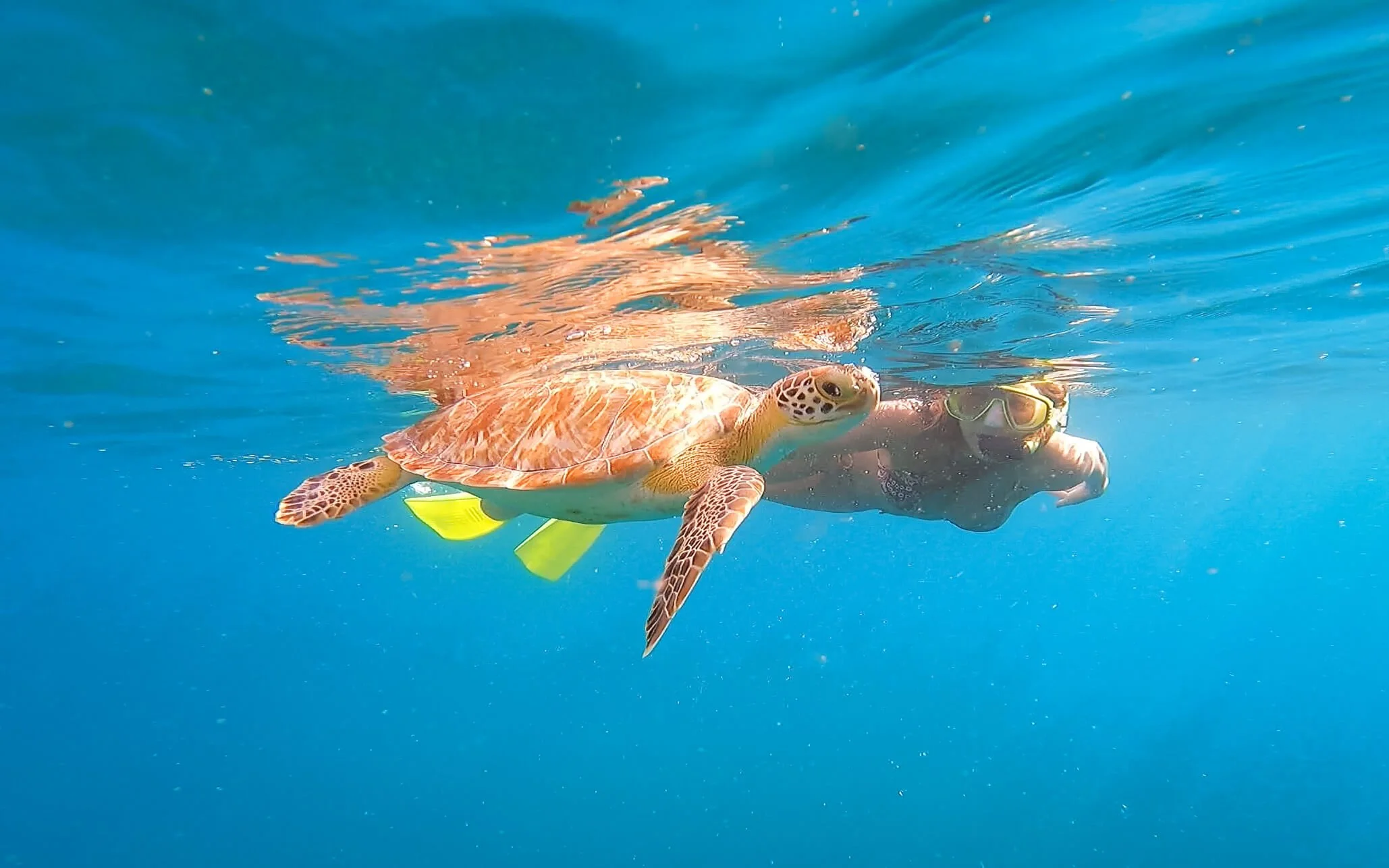
Snorkeling with sea turtles
1. Coki Point Beach: The Most Fish in St. Thomas
Coki Point is famous for one thing: fish, and lots of them. Within a few feet of the shore, in water only waist-deep, you'll find yellowtail snapper, sergeant majors, and trumpetfish swirling around you. Swim along the rocky edge on the right side of the beach to find coral heads and even more marine life.
Skill level: Beginner to intermediate
Facilities: Snorkel gear rentals, chairs, food and drink vendors, and paid parking nearby
Best time: Early morning, before the beach fills up
Local tip: Coki is right next to Coral World Ocean Park, so it's easy to combine the two in one day with kids. Settle rental prices with vendors before you pay, and bring small bills.
2. Brewers Bay: Best for Sea Turtles
Next to the University of the Virgin Islands and near the airport, Brewers Bay is the most reliable place in St. Thomas to see sea turtles from shore. Green sea turtles, and sometimes hawksbills, feed on the seagrass beds a short swim from the beach. There isn't much coral here, but the turtle sightings more than make up for it. Swim slowly over the grass, look for dark shapes on the bottom, and wait for a turtle to rise for a breath.
Skill level: Beginner to intermediate
Facilities: Limited. Bring your own gear. Food trucks are often parked nearby.
Best time: Early morning, when turtles are active and the water is calm
3. Lindquist Beach: Healthy Reef with Fewer Crowds
Lindquist Beach sits inside Smith Bay Park, a protected area on the East End, and the reef here is healthier than at many busier beaches. Seagrass beds just offshore attract turtles and rays. For the best snorkeling, swim toward the rocky point on the right side of the beach, where elkhorn coral shelters angelfish, blue tang, and spotted drum. Cruise groups rarely come here, so the water is usually peaceful.
Skill level: Intermediate
Facilities: Restrooms, pavilions, and parking, with a small entrance fee. There's no gear rental, so bring your own.
Best time: Early morning, for the calmest water and the most sea life
4. Sapphire Beach: Snorkeling with a Beach Bar
Sapphire Beach offers reef on the right side of the beach, good visibility, and views of St. John and the British Virgin Islands. It also has a full lineup of amenities, so after a morning snorkel you can grab lunch and a drink at the beach bar without leaving the sand.
Skill level: Intermediate
Facilities: Beach bar and restaurant, plus snorkel, paddleboard, and kayak rentals
Best time: Morning, before the trade winds build
5. Magens Bay: Snorkel the Edges
Magens Bay is better known for swimming than snorkeling, but the rocky edges at either end of the beach are worth exploring. Look for reef fish, rays, and occasionally large tarpon, while pelicans dive for fish right above you. The sandy middle of the bay has little to see underwater, but its calm, shallow water makes it a good place to practice before trying other spots. For fees and parking, see our Magens Bay Beach Guide.
Skill level: Beginner
Facilities: Lifeguards, restrooms, food, and snorkel gear rentals
Best time: Opening time, before cruise excursions arrive
6. Hull Bay: Snorkel the Western Point
On the Northside, Hull Bay is a local favorite, with fishing boats pulled up on the sand and a relaxed, everyday island feel. For snorkeling, head to the rocky point on the west side of the bay, where you'll find reef fish and coral along the rocks. It's best in summer, when the water is calm. In winter, the waves that bring surfers to Hull Bay make snorkeling difficult.
Skill level: Intermediate
Facilities: Limited. Bring your own gear.
Best time: Summer mornings
7. Neltjeberg Bay: Best Hidden Snorkel Spot
About 10 minutes west of Hull Bay, Neltjeberg Bay (locals call it "Nelty") feels like a deserted island. A half-moon of soft sand is lined with coconut palms, the small island of Inner Brass sits just offshore, and on many days you'll share the beach with only a handful of people. The reef off the left side of the beach is home to plenty of fish, and the ruins of an 18th-century Danish sugar plantation sit in the forest along the road down.
How to get there: The road down is unpaved and rough, so a 4x4 or all-wheel-drive vehicle is strongly recommended. Without one, park at nearby Dorothea Beach and take the trail from the west end of the beach, a hike of about 20 minutes.
Skill level: Intermediate
Facilities: None. Bring water, food, shade, and your own gear.
Best time: Calm mornings. Waves can be strong on this exposed stretch of the North Shore, especially in winter.
For more places like this, see our Hidden Gems in St. Thomas guide.
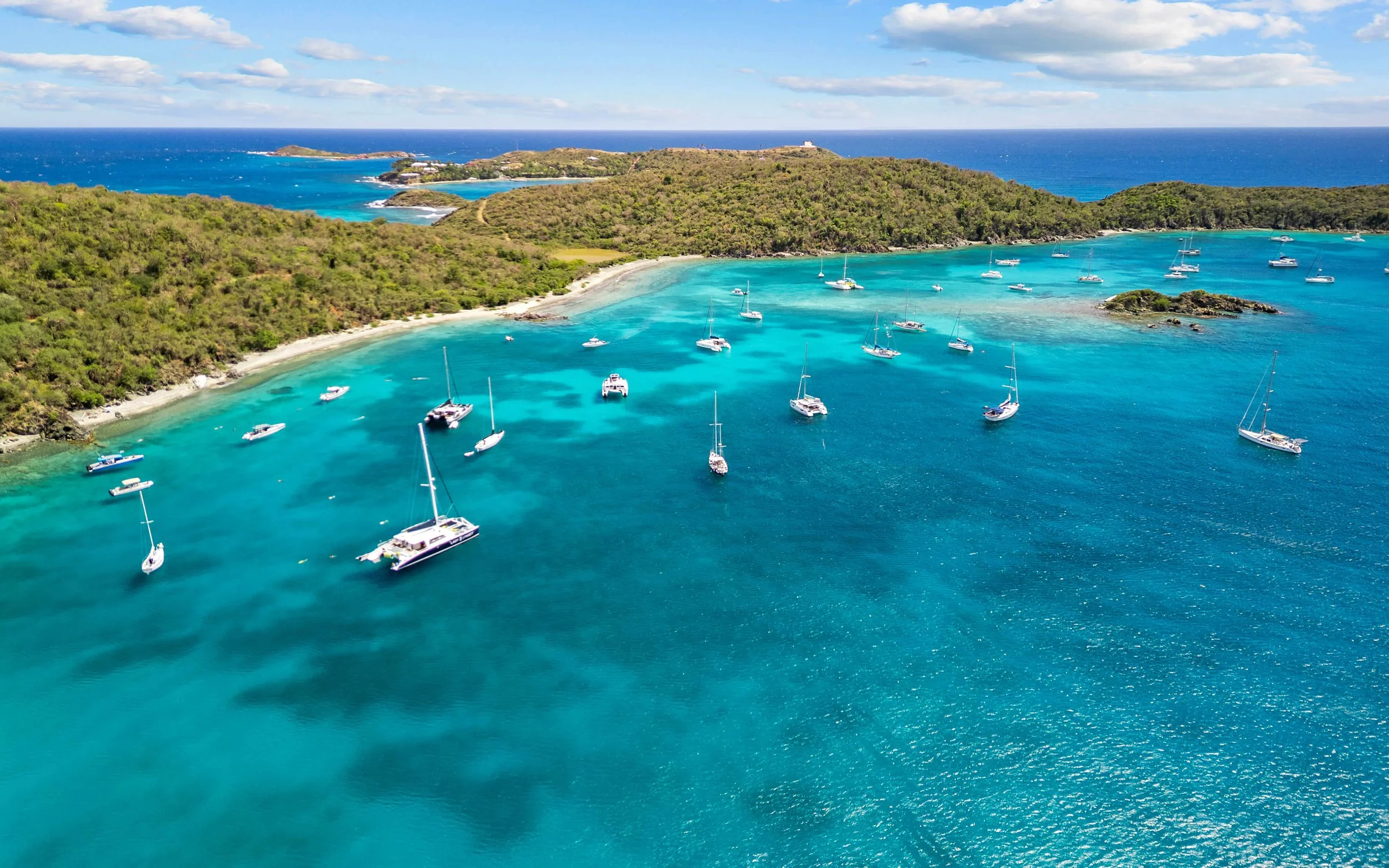
Christmas Cove, Great St. James
8. Christmas Cove: Snorkeling and Pizza by Boat
Off Great St. James Island, just east of St. Thomas, Christmas Cove combines a colorful reef with one of the most unique lunch spots in the Caribbean: Pizza Pi, a floating pizzeria anchored in the cove. Snorkel along the reef, then order a pizza from your boat. The cove is calm and protected, making it a favorite anchorage for day charters.
How to get there: Christmas Cove is reached by boat. Many snorkel trips include it as a stop, or you can book a private charter or water taxi from the East End.
Skill level: Beginner to intermediate
Best time: Midday, when the sun lights up the reef. Weekends are the busiest.
Snorkeling for Non-Swimmers and Beginners
If you're not a strong swimmer, you can still explore the underwater world:
Wear a snorkel vest. Most rental shops and boat crews provide inflatable vests that keep you floating comfortably at the surface.
Start in calm, shallow water. Magens Bay and the inshore area at Coki Point are the easiest places to get comfortable.
Try SNUBA or Sea Trek at Coral World. Next to Coki Point, SNUBA lets you breathe through an air line connected to a tank at the surface, and Sea Trek lets you walk on the ocean floor wearing a helmet that supplies fresh air. Neither requires scuba certification.
How to Find Sea Turtles in St. Thomas
Seeing a sea turtle is on almost every visitor's wish list. Here's how to improve your odds:
Look over seagrass. Green sea turtles eat seagrass, so they're most often found grazing over grassy areas like those at Brewers Bay and Lindquist Beach, not coral.
Go early. Turtles are active in the morning, and calm morning water gives you the best visibility.
Move slowly. Glide instead of kicking hard, and keep splashing to a minimum.
Watch for surfacing. Turtles come up for air every few minutes. If you see one rise, stay still and let it return to the bottom.
Respect the turtles. Sea turtles are protected under federal law. Never touch, chase, feed, or ride a turtle, and give it plenty of room, especially when it's surfacing to breathe. Watching quietly from a distance leads to the longest, best encounters.
Snorkeling Tips for St. Thomas
Snorkel in the morning. The trade winds usually pick up in the afternoon, bringing waves and reducing visibility.
Use reef-safe sunscreen. The U.S. Virgin Islands bans sunscreens containing oxybenzone, octinoxate, and octocrylene because they harm coral. Choose a mineral sunscreen with zinc oxide, or wear a rash guard to cut down on sunscreen.
Don't touch or stand on coral. Coral is a living animal and grows very slowly. Touching it can kill it, and some types, like fire coral, will sting you.
Watch where you put your feet. Sea urchins with long black spines live in rocky areas. Enter and exit the water over sand when possible.
Snorkel with a buddy. Always swim with a partner, and let someone on shore know where you're going, especially at remote beaches like Neltjeberg.
Check North Shore conditions. Magens Bay, Hull Bay, and Neltjeberg face north, and winter swells can make them rough. On those days, snorkel on the East End at Coki, Lindquist, or Sapphire instead.
Watch for boats. Stay inside swim areas and away from channels and moorings. A brightly colored swim buoy makes you easier to see.
Bring your own mask if you can. A mask that fits your face well makes a big difference. Rental gear is available at Coki Point, Sapphire Beach, and Magens Bay.
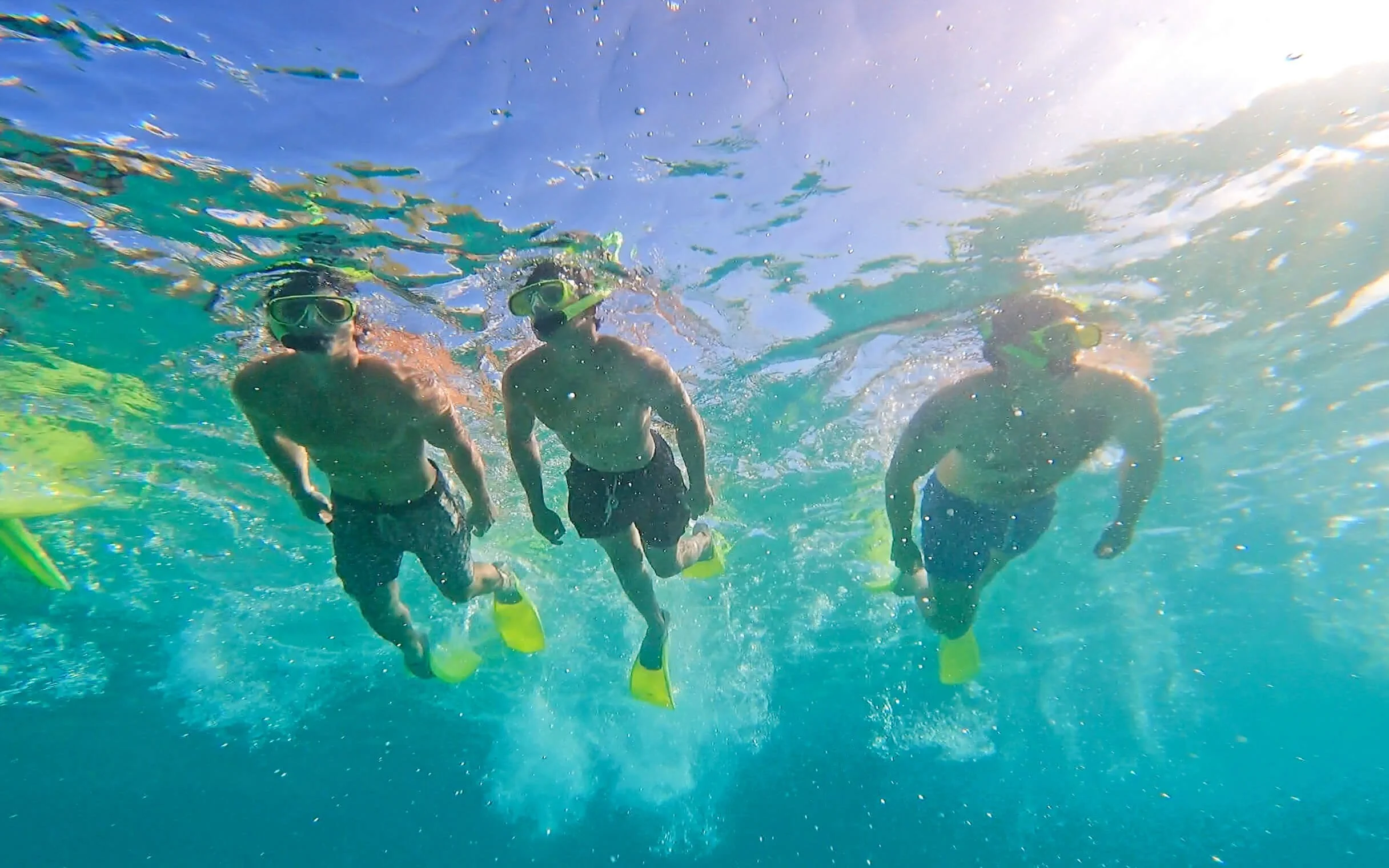
Snorkelers in the USVI
Frequently Asked Questions About Snorkeling in St. Thomas
Where is the best snorkeling in St. Thomas?
Coki Point Beach has the most fish close to shore, Brewers Bay is best for sea turtles, Lindquist Beach has healthy reef with fewer crowds, and Sapphire Beach offers good reef with a beach bar. By boat, Christmas Cove is a favorite snorkel stop.
Can you snorkel in St. Thomas without a tour?
Yes. Coki Point, Brewers Bay, Lindquist Beach, Sapphire Beach, Magens Bay, Hull Bay, and Neltjeberg Bay are all reachable by car, with reef or seagrass just a short swim from the beach.
Where can I see sea turtles in St. Thomas?
Brewers Bay is the most reliable spot to see green sea turtles from shore. Turtles also graze in the seagrass off Lindquist Beach.
Is snorkeling in St. Thomas good for beginners?
Yes. Magens Bay and the shallow inshore area at Coki Point are great for first-timers, and snorkel vests are available to rent at most popular beaches.
When is the best time to snorkel in St. Thomas?
Snorkeling is good year-round. Mornings usually have the calmest water and best visibility, before the trade winds pick up in the afternoon.
How do you get to Neltjeberg Bay?
Neltjeberg Bay is on the North Shore, about 10 minutes west of Hull Bay. The road down is rough and unpaved, so a 4x4 is recommended. You can also hike about 20 minutes from nearby Dorothea Beach.
How do you get to Christmas Cove?
Christmas Cove is off Great St. James Island and is reached by boat. Many snorkel trips stop there, or you can book a private charter or water taxi from the East End.
What kind of sunscreen should I use for snorkeling in St. Thomas?
Use a reef-safe mineral sunscreen with zinc oxide. The U.S. Virgin Islands bans sunscreens containing oxybenzone, octinoxate, and octocrylene to protect coral reefs.
Stay Close to the Best Snorkeling
The best snorkeling happens early, when the water is glassy and the turtles are active, and that's easy when you're staying just minutes away. Book direct for the best rates and local tips on where the turtles are showing up this week.