

The U.S. Virgin Islands and the British Virgin Islands sit right next to each other. From parts of St. Thomas and St. John, you can look across the water and see the BVI on the horizon. They share the same turquoise water, the same trade winds, and even the same currency. But they're two different places, with different governments, entry rules, histories, and personalities.
If you're planning a Caribbean vacation, it's one of the most common questions travelers ask: What's the difference between the USVI and the BVI, and which one is right for me?
This guide breaks down the key differences, from passports and money to beaches, nightlife, and vibe, and explains why the best answer for many travelers is to experience both.
Quick Answer: The U.S. Virgin Islands (St. Thomas, St. John, St. Croix, and Water Island) are a U.S. territory, so U.S. citizens don't need a passport, and U.S. phone plans work normally. The British Virgin Islands (including Tortola, Virgin Gorda, and Jost Van Dyke) are a British Overseas Territory, so a passport is required. Both use the U.S. dollar and drive on the left. The USVI offers easier travel, more dining, nightlife, and shopping, and Virgin Islands National Park. The BVI is quieter and famous for sailing, beach bars, and The Baths. Staying on St. Thomas lets you enjoy both.
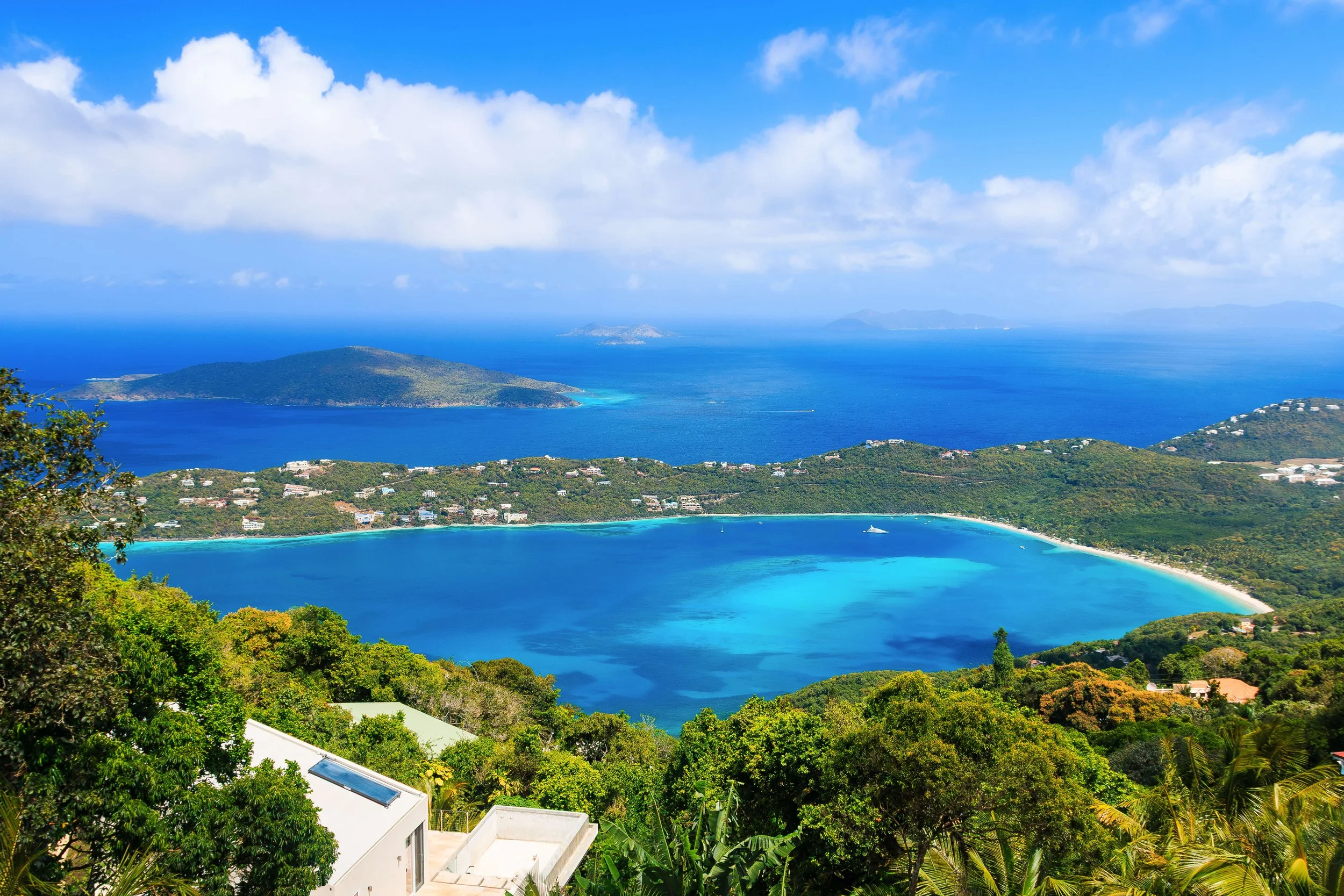
Mountain Top, St. Thomas
A Tale of Two Territories: History and Government
The U.S. Virgin Islands
For more than two centuries, St. Thomas, St. John, and St. Croix were the Danish West Indies, a Danish colony built largely on the labor of enslaved Africans until emancipation in 1848. In 1917, the United States purchased the islands from Denmark, and they became a U.S. territory. The transfer is still celebrated every year on March 31, Transfer Day.
Today, Virgin Islanders are U.S. citizens, and the territory elects its own governor and legislature. You'll see the Danish influence everywhere, from the red walls of Fort Christian to street names like Dronningens Gade in Charlotte Amalie.
The British Virgin Islands
The British Virgin Islands have been under British control since the late 1600s. Today, the BVI is a British Overseas Territory with its own elected government, led by a Premier, and a Governor who represents the British Crown. English is the official language, and the islands have a strong local identity shaped by African, British, and Caribbean traditions.
Getting There
USVI: St. Thomas and St. Croix have airports with direct flights from several mainland U.S. cities, making the USVI one of the easiest Caribbean destinations to reach. Flying in feels like a domestic trip, with no passport control on arrival for U.S. citizens.
BVI: The BVI has a smaller airport on Beef Island, next to Tortola, with mostly regional connecting flights. Because of this, many visitors fly into St. Thomas and take a ferry or private boat to the BVI. That's one reason St. Thomas makes such a convenient home base.
For ferry routes and schedules, see our Island Hopping the Virgin Islands guide.
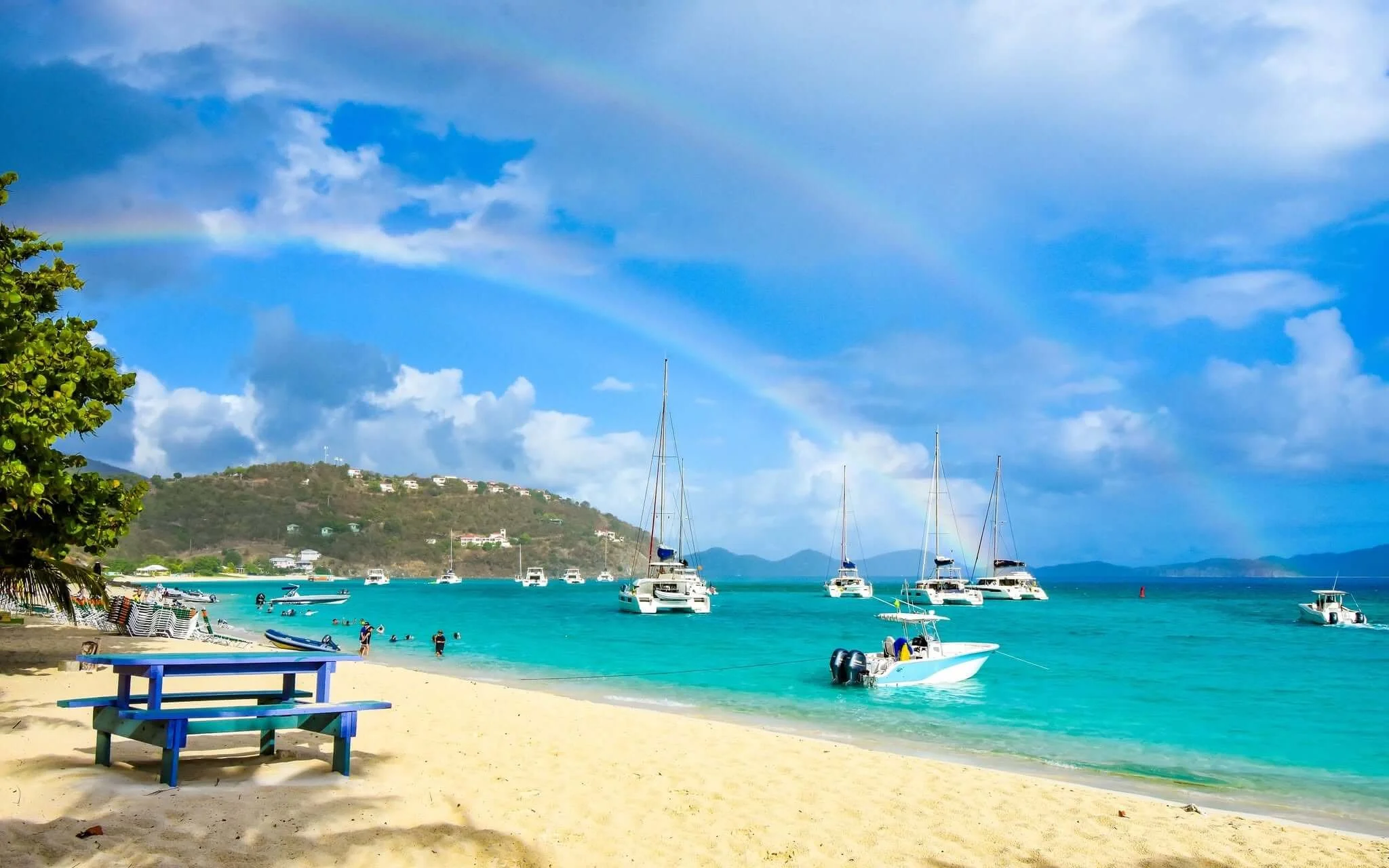
White Bay, Jost Van Dyke, BVI
Passports and Entry Requirements
USVI: U.S. citizens don't need a passport to travel to or between St. Thomas, St. John, St. Croix, and Water Island. A government-issued photo ID is enough for domestic flights. Returning to the mainland, you'll pass through a U.S. Customs check at the airport.
BVI: The BVI is a separate country, so every traveler needs a valid passport, including children. Visitors must also complete an online embarkation card before arrival, and there are entry and departure fees for travel by ferry or boat. When you return to St. Thomas, you'll clear U.S. Customs and Border Protection.
Money, Shopping, and Costs
Currency: Both the USVI and the BVI use the U.S. dollar, so there's no need to exchange money. Credit cards are widely accepted, but carrying some cash is useful for taxis, beach bars, and fees.
Shopping: The USVI is famous for duty-free shopping, especially in Charlotte Amalie on St. Thomas. U.S. citizens returning from the USVI have a duty-free allowance of $1,600 per person, double the allowance for most other international destinations. The BVI has fewer large shopping districts but plenty of local boutiques and artisan shops.
Costs: Both destinations can be pricey, since most goods are imported. The USVI generally offers a wider range of options for dining and lodging at different price points.
Getting Around
Driving: In both the USVI and the BVI, you drive on the left, even though most cars have the steering wheel on the left like on the mainland. Roads on both are steep, narrow, and winding.
Between islands: In the USVI, frequent ferries connect St. Thomas and St. John in about 20 minutes. In the BVI, ferries link Tortola with Virgin Gorda, Jost Van Dyke, and Anegada. Many visitors explore the BVI by private boat, which is the easiest way to see several islands in a day.
Phones and Wi-Fi: U.S. phone plans work normally in the USVI. In the BVI, you may pay international roaming charges, so check with your carrier before you go.
Vibe and Atmosphere
USVI: Lively and convenient. St. Thomas is the busiest island in the Virgin Islands, with a bustling harbor, a wide range of restaurants, bars in Red Hook and Frenchtown, and plenty of shopping. St. John offers the opposite: a quiet, natural escape where most of the island is national park. St. Croix has its own laid-back, historic charm.
BVI: Laid-back and nautical. The BVI feels quieter and more remote, with fewer large resorts and less traffic. Life revolves around the water, with sailboats anchored in quiet bays and beach bars you can only reach by boat. It's the classic "no shoes, no problem" Caribbean.
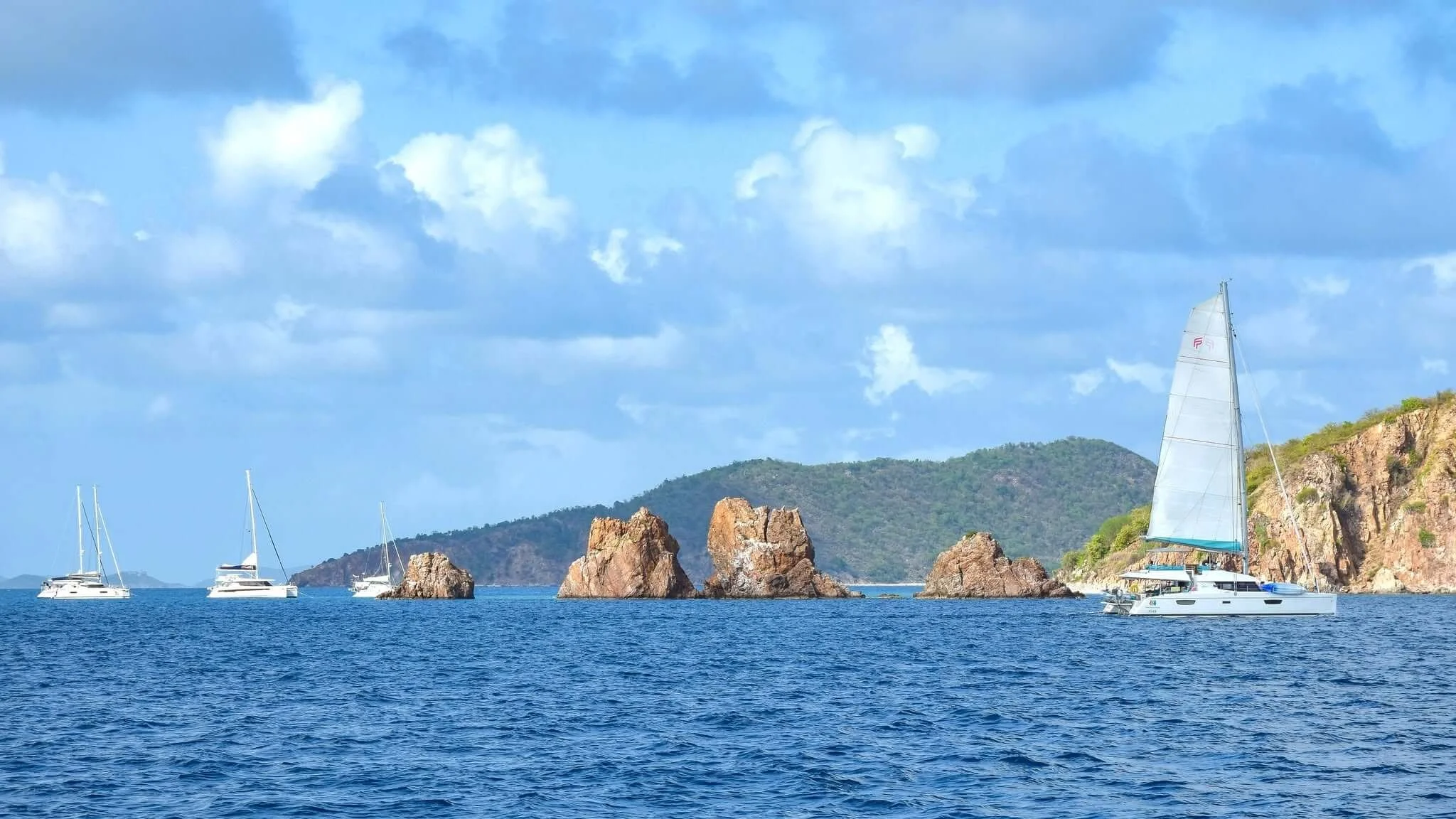
The Indians, BVI
Which Is Better For…?
Beaches
Both are world-class. The USVI has Magens Bay on St. Thomas and Trunk Bay on St. John, two of the most famous beaches in the Caribbean. The BVI has White Bay on Jost Van Dyke, Cane Garden Bay on Tortola, the boulder-framed beaches of Virgin Gorda, and Anegada's remote shoreline.
Best Beaches in the Virgin Islands →
Snorkeling
Both are excellent. St. John's national park reefs and the turtles of Maho Bay are standouts in the USVI, along with Coki Point and Brewers Bay on St. Thomas. In the BVI, The Caves and The Indians at Norman Island and the grottoes of The Baths are bucket-list snorkel spots.
Best Snorkeling in the Virgin Islands →
Sailing and Boating
Edge: BVI. The BVI is known as the sailing capital of the Caribbean, with calm, protected waters and dozens of islands close together. Day charters from St. Thomas make it easy to experience.
Beach Bars
Edge: BVI. The Soggy Dollar Bar, Foxy's, and the Willy T are legendary. The USVI has its own favorites, too, like Sapphire Beach Bar and Iggie's on St. Thomas.
Dining and Nightlife
Edge: USVI. St. Thomas has the widest selection of restaurants and the liveliest nightlife in the Virgin Islands, from Red Hook's bars to Frenchtown's wine bars and dance clubs.
Nature and Hiking
Edge: USVI. Virgin Islands National Park covers more than half of St. John, with dozens of trails, ruins, and protected bays. The BVI also has beautiful protected areas, including The Baths.
Virgin Islands National Park Guide →
Shopping
Edge: USVI. Charlotte Amalie is one of the best-known duty-free shopping destinations in the Caribbean.
Ease of Travel
Edge: USVI. Direct flights, no passport for U.S. citizens, and U.S. phone plans make the USVI one of the easiest Caribbean trips from the mainland.
Which Should You Choose?
Choose the USVI if you want:
An easy trip without a passport
A wide choice of restaurants, nightlife, and shopping
National park beaches and hiking on St. John
Convenient direct flights from the mainland
Choose the BVI if you want:
A quieter, more remote Caribbean experience
Sailing and island-hopping by boat
Famous beach bars and natural wonders like The Baths
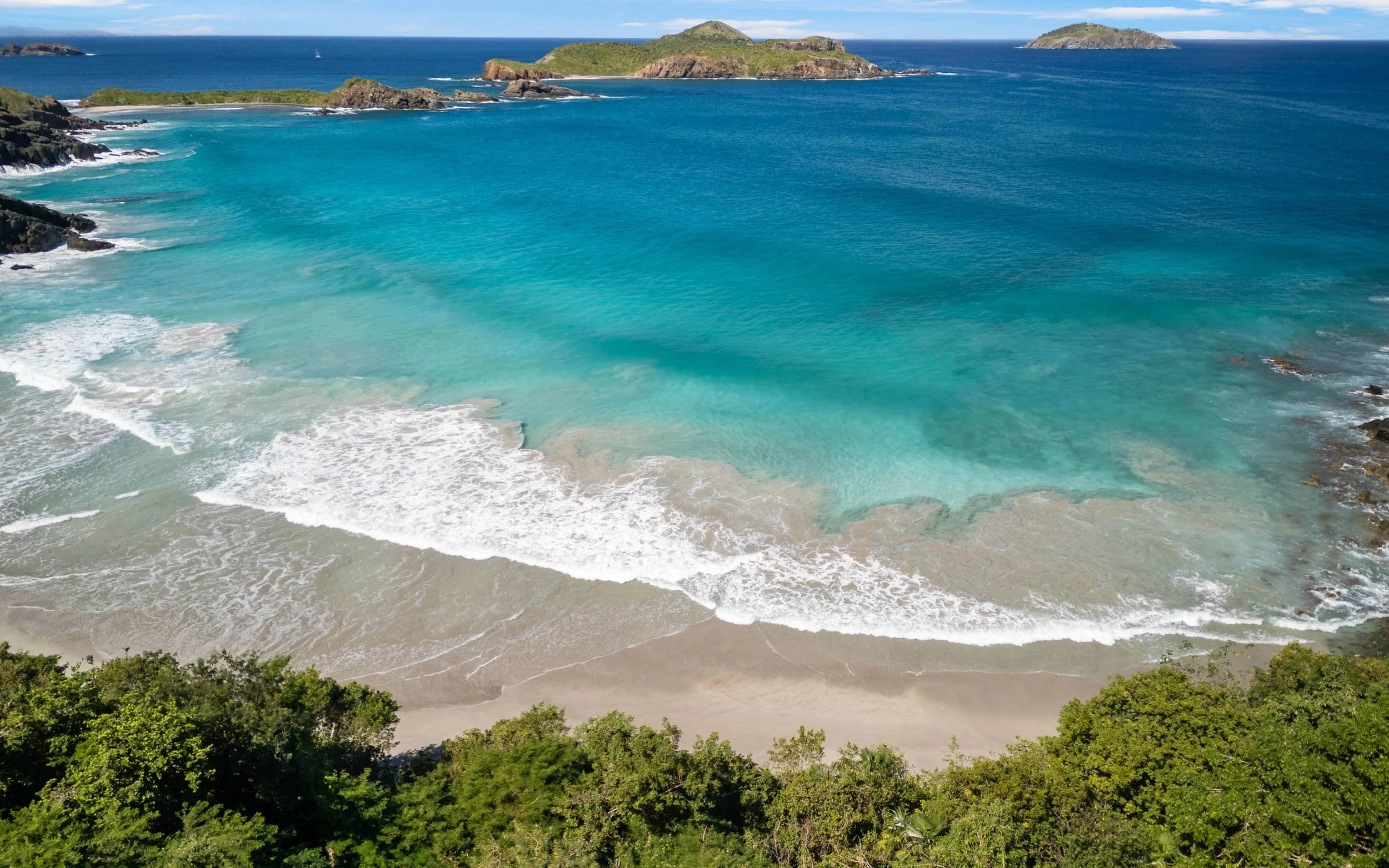
Sandy Bay, St. Thomas
Why Not Both? Stay on St. Thomas
For many travelers, the best answer isn't USVI or BVI. It's both. By staying on St. Thomas, you get the convenience of direct flights and the widest range of dining and nightlife, plus easy access to everything else:
St. John: About 20 minutes by ferry, no passport needed
Jost Van Dyke, Tortola, and Virgin Gorda: A short ferry or boat ride, passport required
Norman Island and The Indians: An easy stop on a private BVI charter
A typical week might include a few St. Thomas beach days, a St. John national park day, and a full-day BVI charter to The Baths and the Soggy Dollar Bar, then coming home every night to your own island retreat.
Frequently Asked Questions About the USVI and BVI
What is the difference between the USVI and the BVI?
The U.S. Virgin Islands are a U.S. territory, and the British Virgin Islands are a British Overseas Territory. U.S. citizens don't need a passport to visit the USVI, but they do need one for the BVI. Both use the U.S. dollar and drive on the left.
Do I need a passport for the U.S. Virgin Islands?
No. U.S. citizens don't need a passport to visit the U.S. Virgin Islands, including St. Thomas, St. John, St. Croix, and Water Island. A government-issued photo ID is enough.
Do I need a passport for the British Virgin Islands?
Yes. Every traveler to the British Virgin Islands needs a valid passport, including U.S. citizens and children. Visitors must also complete an online embarkation card before arrival.
Do the British Virgin Islands use U.S. dollars?
Yes. The U.S. dollar is the official currency of the British Virgin Islands, just like in the U.S. Virgin Islands.
Which is better, the USVI or the BVI?
It depends on your travel style. The USVI is easier to reach and offers more dining, nightlife, and shopping, plus Virgin Islands National Park on St. John. The BVI is quieter and famous for sailing and beach bars. Staying on St. Thomas lets you enjoy both.
Can you visit the BVI from St. Thomas?
Yes. Ferries run from St. Thomas to Tortola and Jost Van Dyke, and private boat charters can visit The Baths, Norman Island, and Jost Van Dyke in a single day. A valid passport is required.
Do you drive on the left in the Virgin Islands?
Yes. You drive on the left in both the U.S. Virgin Islands and the British Virgin Islands, even though most cars have the steering wheel on the left.
Get the Best of Both Worlds
Why choose between the USVI and BVI when you can have both? Book direct to stay on St. Thomas, and get our hosts' insider tips for St. John ferries, BVI charters, and the best day trips across the Virgin Islands.